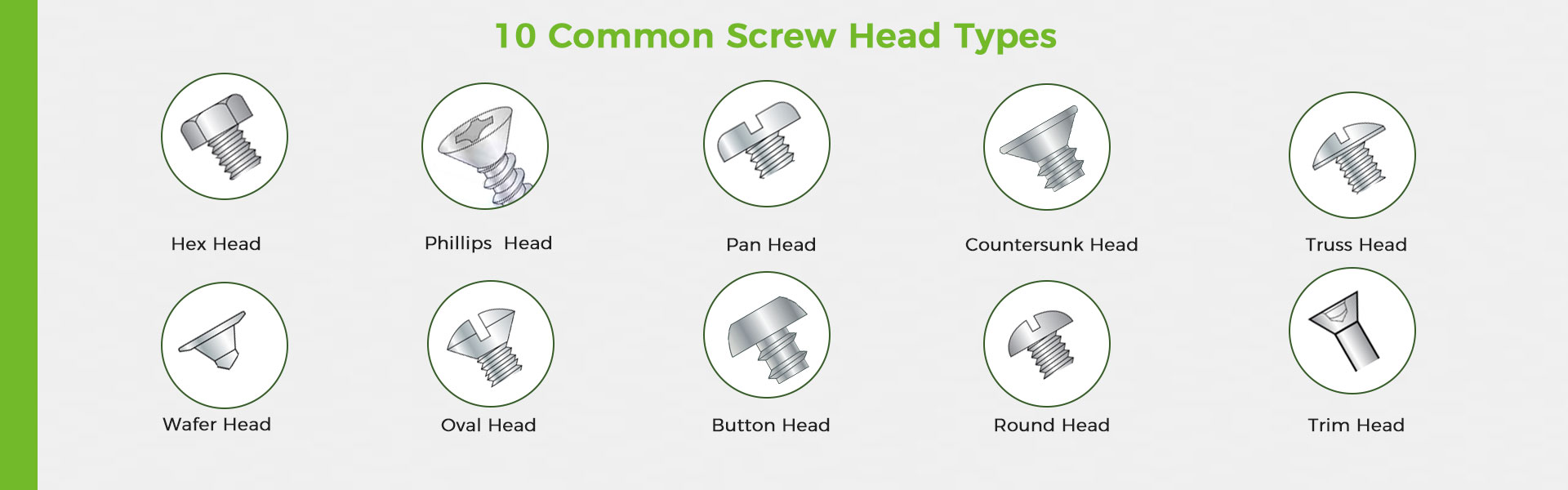
The head type of a screw is determined by the different uses. In the first step of the screw production process, the cold forging machine cold forges the corresponding head type. This guide will explain the 10 common types of screw heads, their respective advantages and when to use them, so that you can easily understand them in 3 minutes.
10 Common Screw Heads and Applications
1.Hex Head
Feature of Hex Head:
Hex Head Screw is a fastener with a hexagonal head. The hexagonal head has a larger contact surface with the tool and can withstand higher torque, 40%-60% higher than the cross slot. It is not easy to slip. The 10mm width across the flat is standardized and can be installed with an external hexagonal wrench or socket. It is usually combined with hexagonal screws or various gaskets to make the installation more secure and sealed.
Applicant:
Based on different specifications and surface treatment methods, it can be used in different scenarios. Galvanized hex screws can be used for the installation of roof colored steel tiles, and the corrosion resistance level is ≥72h salt spray test.
Dacromet’s hex screw can be used for the installation of solar brackets and the reinforcement of steel structure beam-column nodes in coastal areas. Dacromet can withstand high temperatures of 400℃ and acid and alkali corrosion
2.Phillips Head
Feature of Phillips Head:
Phillips Head Screw, also known as cross slot screw, is a screw with a cross-shaped groove on the head. It improves the bite stability between the screwdriver and the screw and reduces the risk of slipping. It needs to be used with a cross screwdriver or an electric screw gun with different screw bits (PH0, PH1, PH2, PH3, etc.). Phillips Head is one of the most common screw head types in the world. The bevel design of its cross slot will cause the screwdriver to pop out when overloaded, preventing over-tightening from damaging the screw or material.
Applicant:
As the most common head type in fasteners, it has a wide range of uses. For example, the most commonly used drywall screws for installing gypsum boards and plastic parts are very typical Philips heads. It should be noted that high torque scenarios should be avoided. In high torque scenarios, it is recommended to use a magnetic bit or impact screwdriver to reduce the risk of screw slippage.
Secondly, PH00-PH1 small screws are suitable for the installation of electronic devices, mobile phones, laptops, home appliances, etc.
The third is that the PH2 standard size can be used for furniture assembly and wood splicing
3.Pan Head
Feature of Pan Head:
Pan Head Screw is a screw with a semicircular bulge on the head. Its name comes from its rounded shape similar to a “pan”. Compared with countersunk screws, it has a larger contact area, which can disperse the tightening pressure and reduce the indentation on the material surface. The medium height of the pan head is higher than the flat head and lower than the round head, balancing the appearance and functionality. It can be matched with a variety of drive groove types, such as cross slot, slot and Torx Drive. No need to pre-drill tapered holes, it can be installed directly
Applicant:
Pan Head Screw is widely used in various fields. For example, Phillips pan head screws are often used in electronic equipment and home appliance assembly. Slotted pan head screw is used in traditional woodworking and retro hardware assembly.
4.Countersunk Head
Feature of Countersunk Head:
Countersunk Head Screw, also known as flat head screw or cone head screw in Chinese, has a conical head with a head angle of usually 82° or 90°, which matches the pre-drilled countersunk hole to ensure that it can be fully embedded in the material surface after installation, achieving a flat and non-protruding effect. Mainstream slot types include Phillips, Slotted and Hex Socket, which meet the needs of manual tools and electric equipment operation. Pre-drilling and chamfering are required during installation, otherwise the head cannot be fully embedded.
Applicant:
Suitable for scenes with high requirements on flatness, such as desktops and cabinet door panels, which require a flat surface without protrusions. Metal processing, sheet metal splicing, aluminum alloy frame, with countersunk holes to avoid scratches
5.Truss Head
Feature of Pan Head:
Truss Head Screw (large flat head screw), also known as wide head screw or thin head screw, is characterized by a head diameter that is 30-50% larger than that of ordinary screws, which can disperse pressure and prevent deformation or tearing of thin plate materials. In order to suit a variety of application scenarios, different drive methods can be selected. Universal Philips Drive, Torx or hexagonal drive is selected for high torque operation. Some types have serrations or knurling on the bottom of the head to enhance friction with the material. Its surface treatment includes phosphating and galvanizing.
Applicant:
Truss head screws do not require countersunk holes and can be used to fix thin plate materials, such as splicing sheet metal or connecting ventilation ducts to prevent thin metal deformation.
Large head diameter can be used for electronic and electrical installations, such as circuit board installation and control box cover installation, which require screws to disperse pressure.
6.Wafer Head
Feature of Wafer Head:
Wafer head screw is also called a thin flat head screw. Its head thickness is significantly smaller than that of ordinary flat head screws . Its head is usually nearly flat or slightly arc-shaped, with sharp edges, which fits perfectly with the countersunk hole. After installation, the head is flush with the surface of the workpiece to ensure a smooth appearance or avoid movement interference. The surface treatment commonly used is galvanizing and Dacromet high temperature corrosion resistance.
Applicant:
Commonly used in consumer electronics and precision instruments, such as fixing the middle frame of smartphones and installing PCB inside smart watches. Wafer head with a thin head avoids squeezing the internal wiring, and the flat surface improves the sealing performance. It can also be used in the automotive industry, such as fixing and installing interior parts, instrument panels, door panel trims, and fixing headlight components. Its low profile can reduce the risk of abnormal noise, and the large contact surface prevents cracking of plastic parts.
7.Oval Head
Feature of Oval Head:
The head of the screw is a dome, which feels smooth and curved. Its bottom is not flat, but has a taper (Countersink), like a shallow inverted cone.
When it is tightened, it can generate an inward tightening force when the screw is tightened, helping to press the connected materials together. The preload force is better than that of a pure round head screw. This taper allows the lower part of the screw head to sink into the connected material and the dome of the upper part to protrude a little above the surface.
Applicant:
Furniture assembly: Especially solid wood furniture, cabinets, door and window hardware. Why? Because the wood surface needs to be fixed with screws, but the completely countersunk screw hole sometimes looks abrupt on the wood texture (especially light-colored wood), and the entire round head is too protruding to get in the way. After the Oval Head is screwed in, the dome part and the wood surface are rounded and transitioned, which looks softer and more “organic”, in line with the texture of wood products. At the same time, the protruding part is very small, and it is not easy to scratch clothes or people. It is used in many high-end furniture or decorative joints that need to be “shown”.
8.Button Head
Feature of Button Head:
Button Head Screw is a screw with a hemispherical dome head, which is higher and rounder than Pan Head and flatter than Round Head. It can be installed directly without countersinking. The head is slightly raised, but not too prominent. Its design takes into account both aesthetics and functionality, and is often used in exposed installation scenarios.
Applicant:
Suitable for the installation of mechanical equipment, such as machine tool guards and 3D printer frames. Select the hexagonal drive to prevent loosening and slipping.
It can also be used for furniture and decoration, such as high-end furniture or display cabinets with high appearance requirements.
9.Round Head
Feature of Round Head:
The head is dome-shaped with moderate height, between flat head screw and Truss Head, visually round and beautiful. The contact area of the head is smaller than that of Wafer Head or Truss Head, and the local pressure is higher. It should be noted that soft materials such as wood and plastic will have indentations. Different drive methods can be used according to different application scenarios, such as Philips Drive, Slotted Drive, Hex Drive, and Torx Drive. No countersink is required, and it can be installed directly, but the screw-in depth needs to be controlled.
Applicant:
Due to its characteristics, it can be used in furniture and decoration projects, such as fixing decorative metal parts of wooden tables and chairs or installing lamp brackets.
Round head The rounded appearance improves safety and avoids scratches.
It can also be used for light mechanical equipment, such as small motor housing assembly and conveyor bracket connection.
It needs to be matched with hexagonal drive to provide reliable fastening, and the round head reduces the risk of motion interference.
The surface needs to be galvanized or Dacromet coated to cope with humid environments.
10.Trim Head
Feature of Trim Head:
Trim Head Screw has a very small head diameter, usually 4-6mm, which is 30-50% smaller than ordinary screws. The screw is basically invisible after installation, and the height is extremely low, only 1-1.5mm, to avoid protruding from the surface. The head edge is smooth to prevent cracking of fragile materials such as gypsum board and wood veneer, which can minimize the damage to the material during installation. It is mainly used in scenes that require concealed installation or fine fixation.
Applicant:
Trim Head Screw is suitable for thin plate materials and is mainly used for decorative projects such as
Fixing skirtings, door frame lines, wood veneer panels and other projects with high concealment requirements.
It can also be used for the installation and repair of gypsum boards, such as repairing the seams of gypsum boards or fixing thin layers of gypsum boards to prevent paper tearing.
Why Screw Head Design Is So Important?
The design of the screw head directly determines what kind of screw it is, where it should be used, what driver to choose, how much torque can be applied when using it, and how beautiful it will look after installation. The right head design can prevent the screw from slipping out of the screw bit during use, avoid damage to the material during installation, and better save installation costs. Understand the different screw heads, their advantages, and when to use them, so that you can accurately choose the right screw head.
How To Choose The Right Screw Head Type?
Select Head Type According To The Characteristics Of The Installation Material
Material | Screw Head | Reason |
Thin Metal Sheet | Truss Head | Distributes pressure and prevents deformation |
Solid Wood | Flat Head | Flush surface, beautiful |
Plastic | Pan Head | Anti-cracking, large contact area |
Gypsum Board | Trim Head | Invisible small head, does not tear the paper surface |
Furniture, electrical appliances | Phillips Head | Most common for household use, but easy to slip, suitable for medium and low torque |
Based On Torque And Strength Requirements
For high torque scenarios such as steel structure connection and installation, choose Hex Head or Torx, which has the strongest anti-slip ability.
For precision low torque installation such as electronic products, choose Phillips head screws or precision Torx (T5-T10).
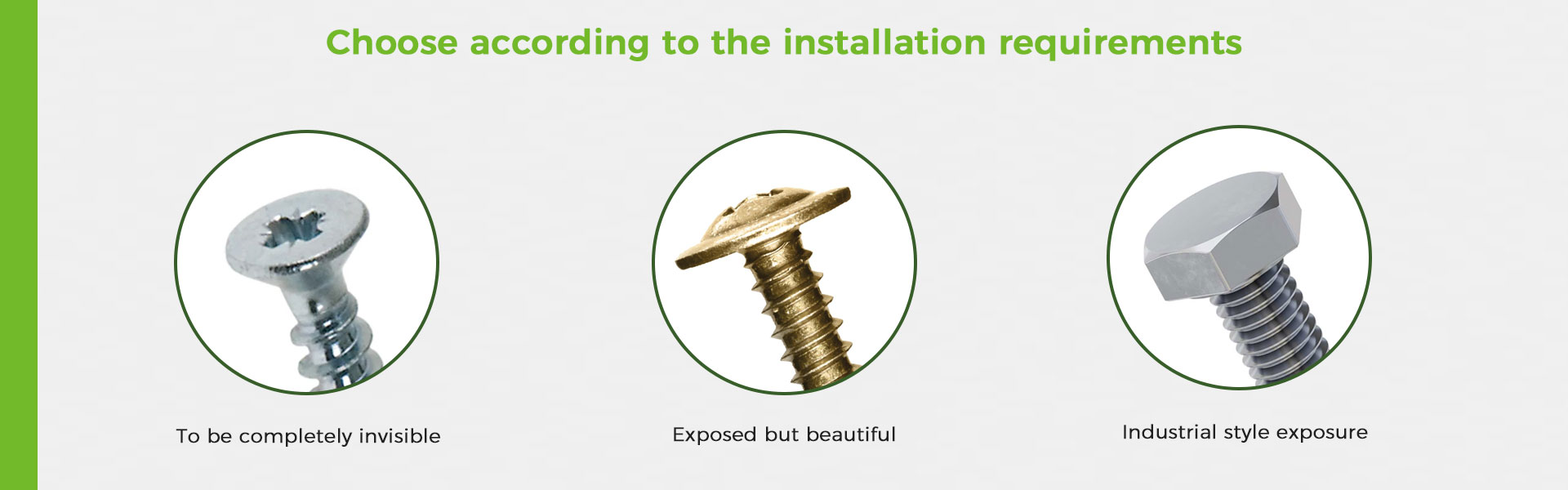
Choose according to the installation requirements
To be completely invisible: choose Countersunk Head + putty filling.
Exposed but beautiful: choose Button Head (dome head) or Black Oxide coated screws.
Industrial style exposure: Hex Head (external hexagon), non-slip and sturdy
Ultimate advice
Try before you buy: Test the compatibility of the head type and the screw bit on scraps.
Brand selection: Sinsun’s multi-specification set can cover 90% of scenarios.
Spare parts principle: The most commonly used head types (such as Phillips #2) can be kept in stock.
Warm tip: There is no universal head type, but the overview in this article can help you find the most suitable screw for any project