Reliable China Manufacture
Self Drilling Drywall Screws
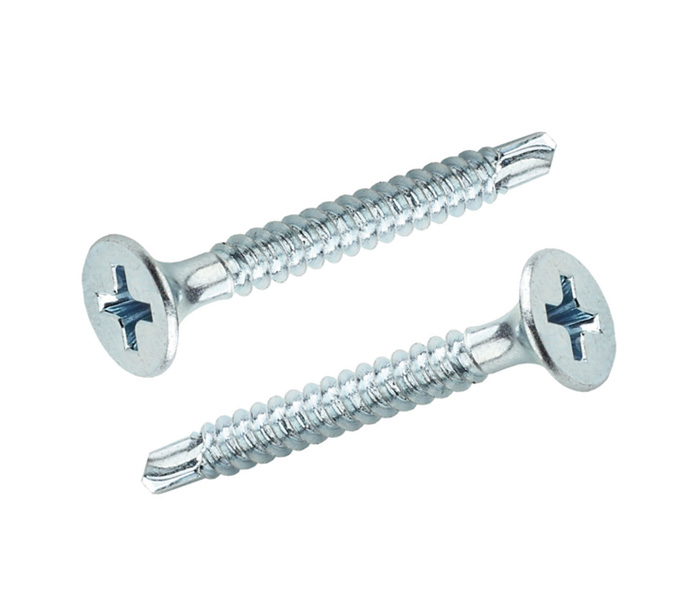
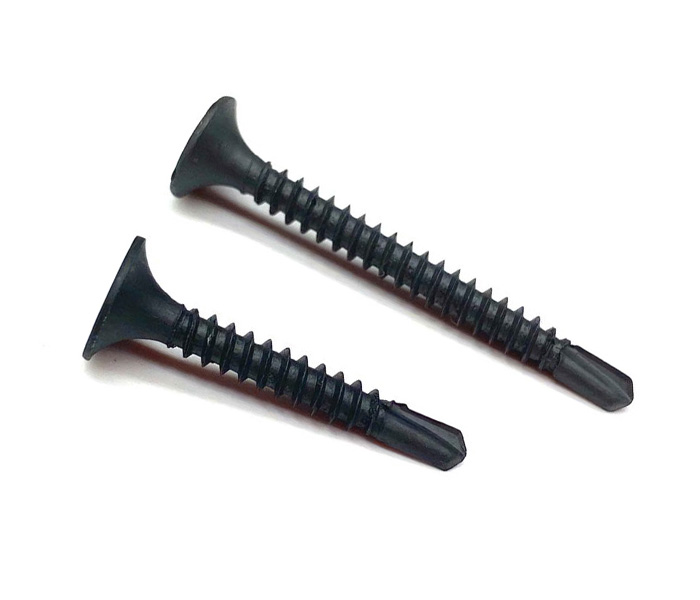
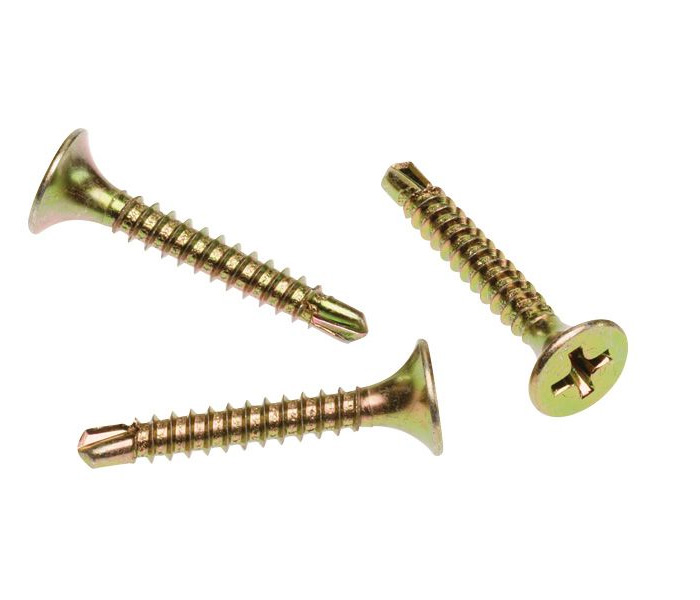
Self-Drilling Drywall Screws are screws optimized for metal keel systems. They combine self-drilling and self-tapping functions. They can quickly penetrate gypsum boards and directly tap steel without pre-drilling. They are suitable for high-strength scenarios such as commercial partitions and suspended ceilings.
Key Features:
- Strengthened self drilling drill tip design
- Drywall To Heavy-Gauge Metal
- The deeper Philips #2 driver is better suited for drywall screw guns
- A variety of anti-corrosion coatings are available
- Bugle Head avoids tearing of the material surface when screwing in
- Anti-slip design: Fine thread tightly bites the metal surface to prevent loosening due to vibration
- Anti-droop performance: Extended screws (such as 1-5/8 inches) ensure penetration of double-layer gypsum board and deep into the keel to prevent long-term gravity sagging
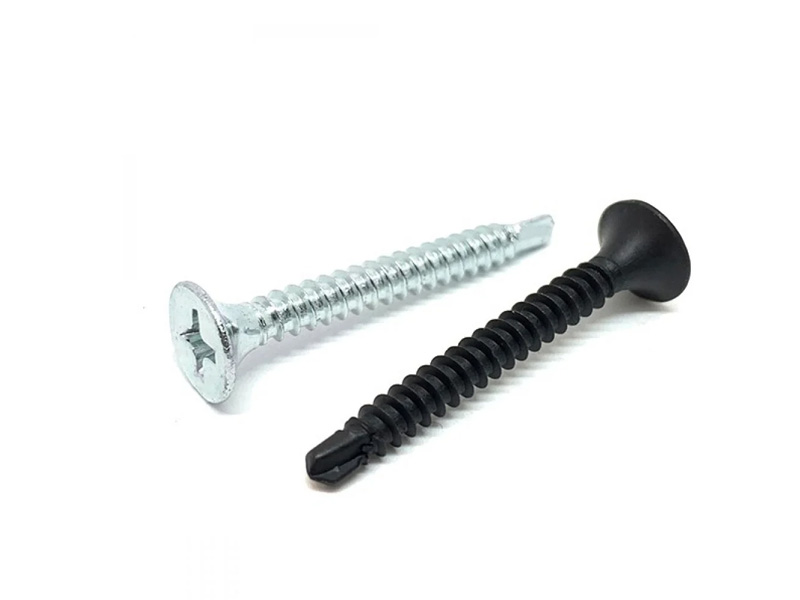
Self Drilling Plasterboard Screws
Sinsun’s Self-Drilling Plasterboard Screws are designed for fast drilling in drywall to fix Plasterboard to metal or wooden frames. They integrate drilling and thread engagement functions. When installing, you need to use an electric screwdriver with depth adjustment to ensure that the screw head sinks 1-2mm into the board surface to provide a flat base for subsequent decoration.
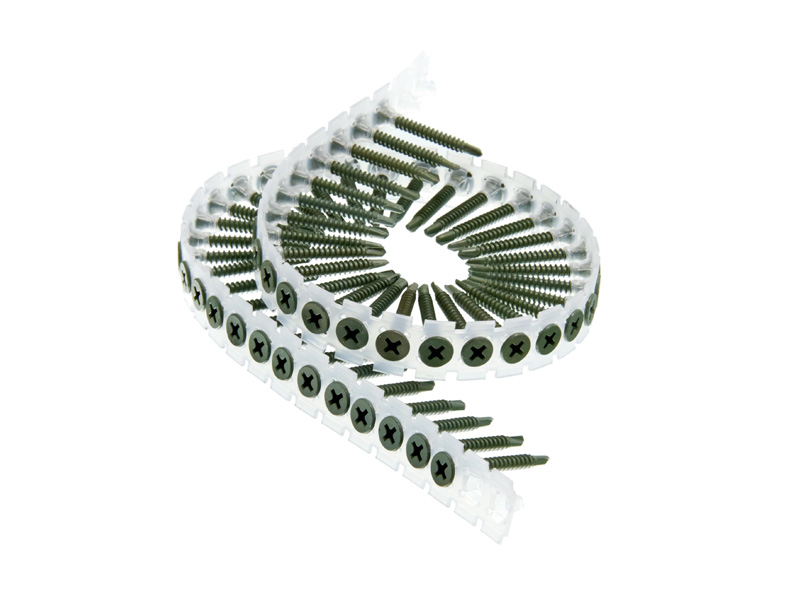
Collated Self Drilling Screws
Collated Self-Drilling Drywall Screws are drywall screws designed for fast and mass construction. They are connected in series by tape or plastic tape to form a chain. The chain guide reduces the risk of tilting or misalignment. They are suitable for continuous installation with electric screw guns, reducing working hours by 40% and greatly improving the efficiency of gypsum board fixing.
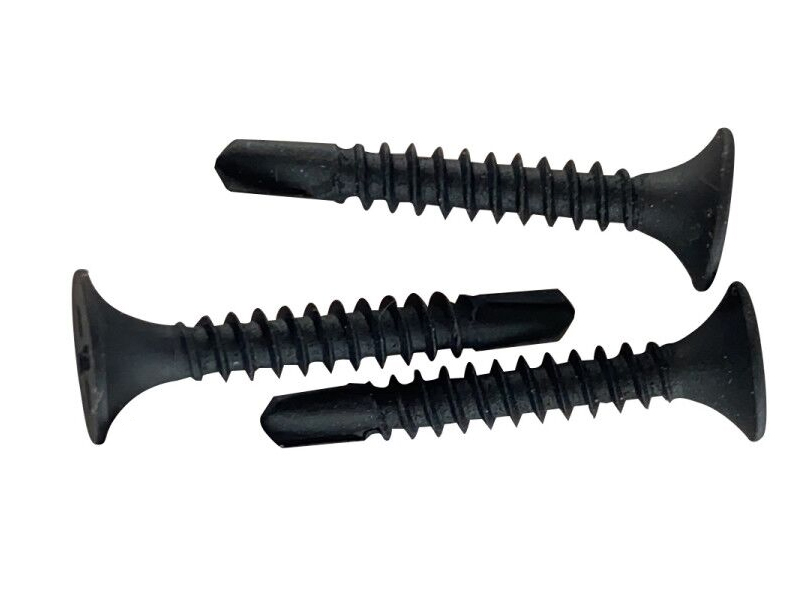
1-1/4 Self Drilling Drywall Screws
1-1/4 inch (32mm) self-drilling drywall screws are designed for single-layer gypsum board. The length covers the thickness of the gypsum board (12.7mm) and is embedded in the keel by at least 12mm, ensuring the tensile strength (single screw bears 50-70 pounds) to prevent loosening after long-term use. The integrated drill tip directly penetrates the gypsum board and metal keel, saving time and effort
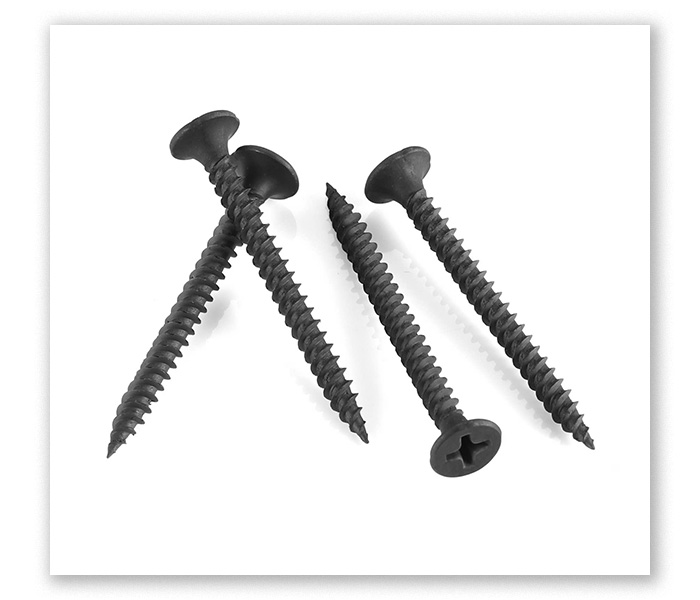
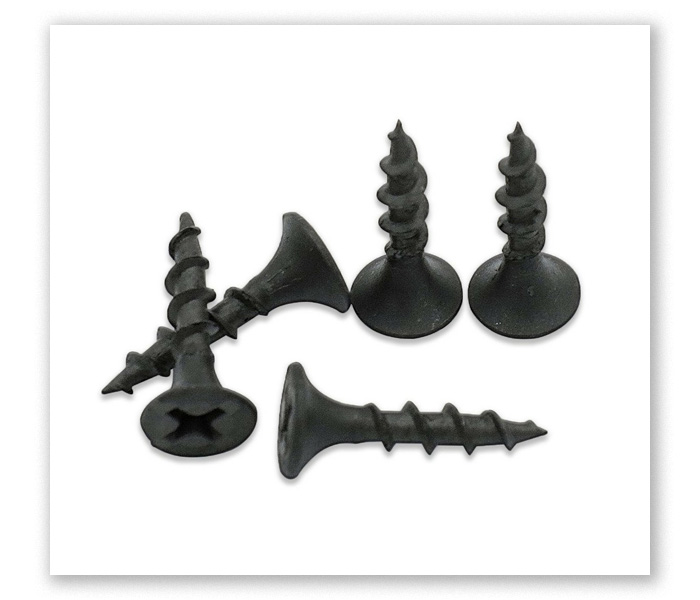
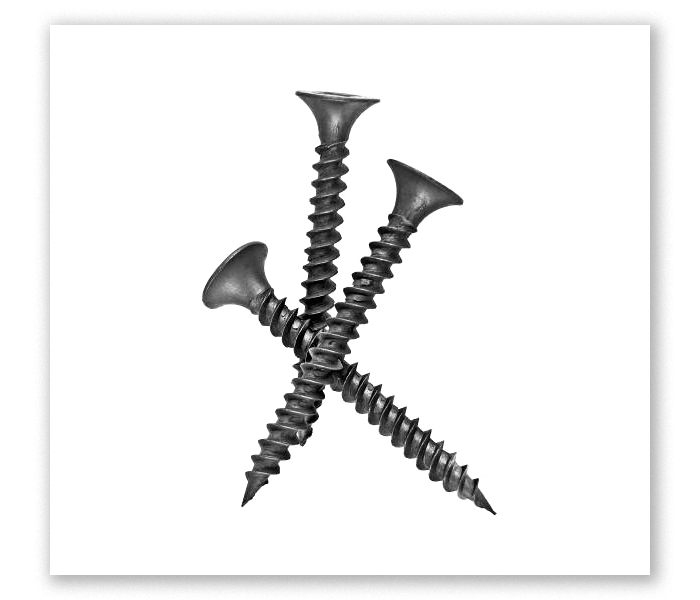
Black Self Drilling
Drywall Screw
Self Drilling Drywall Screws Datas
| Head Type | Phillips Bugles Head | Drive Tpye | #2 Phillips |
| Material | Carbon Steel C1022 | Thread Tpye | Fine Thread |
| Point type | #2 Drill Point | Surface Treatment | Phosphating and galvanizing |
| Size | #6(3.5MM)#7(3.9MM) | Length | 1-2inch (25-50MM) |
Self Drilling Drywall Screws Size
| Gauge | SIZE | PCS/BOX | Package Options |
|---|---|---|---|
| #6(3.5MM) | 1″(25MM) | 1000PCS | 20-25KGS/Carton or 25 KGS Bulk Bag |
| #6(3.5MM) | 1-1/6″(30MM) | 500PCS | 20-25KGS/Carton or 25 KGS Bulk Bag |
| #6(3.5MM) | 1-1/4″(32MM) | 500PCS | 20-25KGS/Carton or 25 KGS Bulk Bag |
| #6(3.5MM) | 1-1/2″(38MM) | 500PCS | 20-25KGS/Carton or 25 KGS Bulk Bag |
| #6(3.5MM) | 1-5/8″(41MM) | 300PCS | 20-25KGS/Carton or 25 KGS Bulk Bag |
| #6(3.5MM) | 1-7/8″(48MM) | 300PCS | 20-25KGS/Carton or 25 KGS Bulk Bag |
| #6(3.5MM) | 2″(50MM) | 250PCS | 20-25KGS/Carton or 25 KGS Bulk Bag |
| #8 (4.2MM) | 1-1/4″(32MM) | 500PCS | 20-25KGS/Carton or 25 KGS Bulk Bag |
| #8 (4.2MM) | 2″(50MM) | 250PCS | 20-25KGS/Carton or 25 KGS Bulk Bag |
| #8 (4.2MM) | 2-3/8”(60MM) | 250PCS | 20-25KGS/Carton or 25 KGS Bulk Bag |
| #8 (4.2MM) | 3″(75MM) | 200PCS | 20-25KGS/Carton or 25 KGS Bulk Bag |
Specification Selection Guide
When installing, it is preferred to use galvanized screws with a diameter of #6 or #8 and a length of 1-1/4 to 2 inches, and ensure that the screw head is sunk 1-2mm into the board surface to leave a flat base surface for plastering.
| Drywall Type | Recommended Screw Length | Diameter (Gauge) |
|---|---|---|
| Single Layer (12.7mm) | 1-1/4″ (32mm) | #6 (3.5mm) |
| Double Layer (25.4mm) | 1-5/8″ (41mm) | #8 (4.2mm) |
| Fire-Resistant (Type X, 15.9mm) | 1-1/2″ (38mm) | #7 (3.9mm) |
Self Drilling Drywall Screws
Uses of Self Drilling Drywall Screws
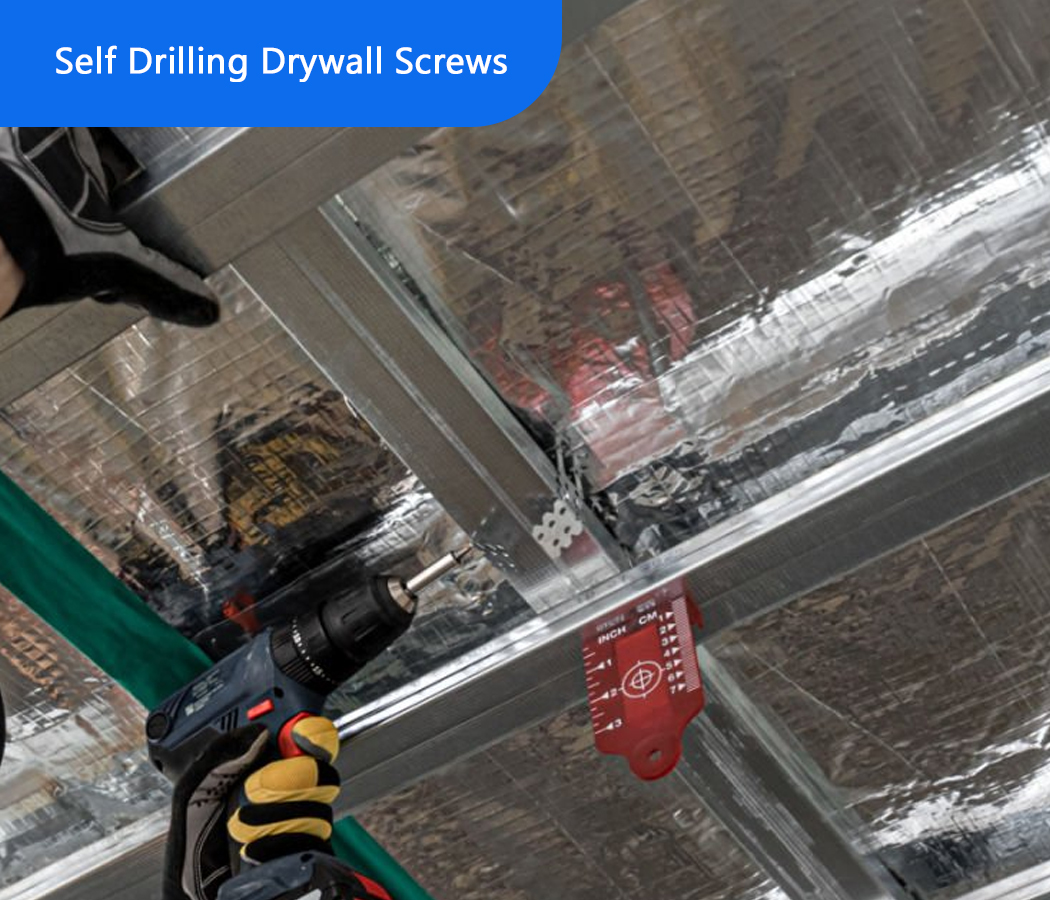
Self Drilling Drywall Screws For Metal Studs
Sinsun’s Self-Drilling Drywall Screws are the most suitable screws for light steel keel systems due to their high penetration and tensile strength. However, attention should be paid to the thickness of the material.
- Fix gypsum board to light steel keel (25-20 galvanized steel), used for partition walls in offices, hospitals, hotels, etc. Directly penetrate the gypsum board and drill into the metal keel, eliminating the pre-drilling step and saving more than 50% of work hours.Anti-slip design: Fine thread tightly bites the metal surface to prevent loosening due to vibration.
- Metal Stud Ceiling Systems fix gypsum board to ceiling light steel keel, suitable for large-span ceilings such as shopping malls and warehouses. The double-thread design disperses stress and adapts to air conditioning and pipeline vibration environments.
- Multi-Layer Wall Assemblies, fix composite walls with sound insulation cotton, insulation layer or fireproof board to metal keel.
How To Install Self Drillling Drywall Screws?
1.Tool preparation:
- Clutch Drywall Screw gun (recommended speed: 2,000-3,000 RPM).
- Magnetic bit #2 Phillips for screw head type
2.Positioning mark:
Mark the screw position along the center line of the keel, with a spacing of ≤12 inches (30cm) and ≥3/8 inches (10mm) from the edge of the board.
3.Direct installation:
Vertically align the mark point, start the tool to rotate at a low speed, and increase the speed after the drill tip penetrates the steel plate until the screw head sinks 1-2mm into the board surface.
4.Check the bite:
Tap the screw head lightly, and it is qualified if there is no looseness; if it shakes, reinstall the adjacent screws and remove the failed parts.
FAQ
What are the disadvantages of self-tapping screws?
Head design: Bugle Head avoids tearing the surface of the gypsum board, while the sharp head of ordinary screws can easily damage the paper surface.
Can the Bugle Screw be reused?
Answer: Not recommended!
The threads may be damaged after removal and may become loose after reinstallation
Why do screws slip on metal keel?s?
Coarse threads may be used by mistake (should be fine threads/S-type).
Metal keels are too thick (over 20 gauge), self-tapping screws or pre-drilling are required.
The electric drill has insufficient torque, change to a higher-power tool
What should I do if a screw pops out after installation?
Remove the protruding screw and clean the hole. Install a new screw near the original hole (distance ≥ 2 inches).
Will Bugle Screws rust? How to prevent rust?
Standard version: Black phosphate coating is suitable for dry indoor environments.
Rust-proof version: Choose zinc-plated or nickel-plated drywall screws (for wet areas such as bathrooms and basements).
Maintenance advice: Check the screw heads annually in wet areas and replace them if they are severely rusted.
What should I do if the screw head protrudes or is too deep after installation?
What should I do if the screw head protrudes or is too deep after installation?
A: Use a tool to screw it back in, or replace it with a shorter screw
Too deep: Use a light putty to fill the hole and install a new screw nearby.
Can I use a Bugle Screw to hang heavy objects (such as cabinets)??
No! The Bugle Screw is only for fixing drywall and is not load-bearing.
To hang heavy objects, use Drywall Anchors or structural screws that are fixed directly to the keel.
Can ordinary screws be used instead of bugle head screws?
The bugle head design of drywall screws cannot be replaced!