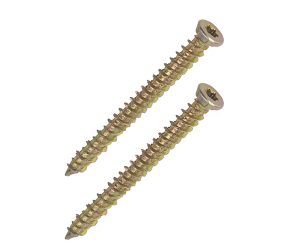
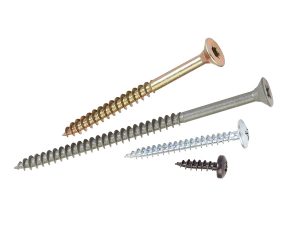
When you are choosing screws for your project, the first thing you need to know is what types of screws there are and their characteristics and uses, so as to choose the screws that are suitable for you. If you don’t know how to choose, you can also check this infographic to have a quick look:

Classification By Raw Materials
The raw material of the screw is the first barrier to screw quality. The raw material affects the lightness and load-bearing capacity of the screw, as well as its corrosion resistance. Screws of different materials should be selected according to different application environments.
1.Carbon Steel Screws
Introduction: Carbon steel screws are the most basic and most commonly used type, generally made of iron + carbon alloy (0.1%-1.0%). Their most prominent features are high strength, strong tensile strength, good hardness and low cost. The disadvantage is that they are easy to rust and corrode, especially in humid or exposed environments, so surface treatment such as galvanizing and phosphating is usually required to improve rust resistance.
Main uses: In relatively dry indoor structures, such as furniture assembly, gypsum ceilings, wooden building frames, connections between internal parts of ordinary mechanical equipment, and electrical fixtures in dry environments.
2.Stainless Steel Screws
Introduction: They mainly contain iron + chromium (≥10.5%) + nickel, which can form a dense passivation film on the surface. The main features of stainless steel screws are excellent corrosion resistance and aesthetics, and they are not easy to rust or discolor. Common types include 304 (general purpose) and 316 (more corrosion resistant, especially salt water resistant). The strength is usually lower than high-strength carbon steel, but it is sufficient to meet most needs. The price is also higher than that of carbon steel screws
Main uses: Suitable for wet, outdoor or corrosive environments, such as kitchen and bathroom, coastal facilities, chemical equipment, food processing equipment, and also often used in places where cleanliness or appearance requirements are high.
3.Brass Screws
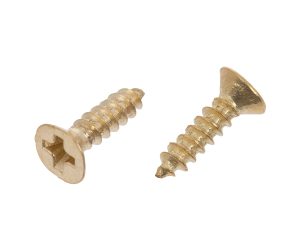
Introduction: Brass screws are made of copper-zinc alloy, which naturally have excellent corrosion resistance, and have a unique golden color and good conductivity. They are relatively soft in texture and not as strong as steel screws. Be careful to avoid slipping or head damage when tightening. Another feature is that they are non-magnetic and have a low friction coefficient.
Main uses: Commonly used in scenes with decorative requirements or where sparks need to be avoided, such as lamps, furniture hardware, musical instruments, door lock accessories, and ship wooden deck fixings. They are compatible with wood and resistant to seawater. They are suitable for occasions where strength requirements are not high but anti-corrosion or aesthetics are required.
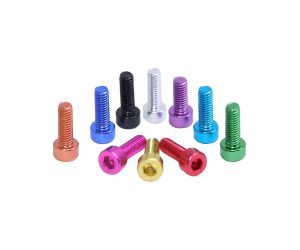
4.Aluminum Alloy Screws
Introduction: The biggest advantage of aluminum alloy screws is that they are extremely light while maintaining a good strength-to-weight ratio. They also have good natural atmospheric corrosion resistance and good thermal and electrical conductivity. Aluminum alloys are usually weaker than steel and have lower hardness. When tightening, you need to pay attention to torque control to prevent thread damage. Some high-strength aviation aluminum alloys (such as 7075) are close to steel in strength, but are more expensive.
Main Applications: Mainly used in occasions where extreme weight reduction is required, such as aerospace vehicles, high-end bicycles, racing parts, portable electronic device housings, and outdoor lightweight equipment. Suitable for environments with moderate strength requirements and weight priority.
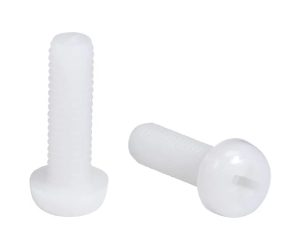
5.Nylon/Plastic Screws
Introduction : Nylon or engineering plastic screws are completely non-metallic fasteners. They are extremely light, completely insulated, chemically resistant, non-magnetic, and rust-proof. The material itself is elastic and can provide a certain buffering and sealing effect. The main disadvantage is that the strength and heat resistance are much lower than metal screws, which are not suitable for high loads or high temperature environments, and are also susceptible to UV aging.
Main uses: Used in situations where insulation, corrosion protection, magnetic interference protection or surface scratching are required. Commonly used inside electronic appliances, such as circuit board fixing, wiring harness management, and some non-structural connections that need to reduce weight.
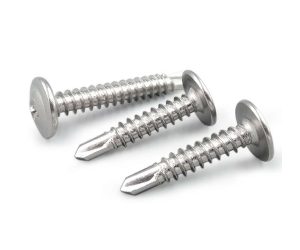
Classification By Surface Treatment
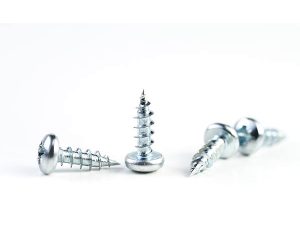
1.Zinc Plating Screws
Introduction: This is the most common and economical surface treatment. The screws are electroplated or hot-dip coated with a layer of zinc. It can effectively prevent the screws from rusting. The appearance is usually shiny silver or blue-white. The main advantages are low cost, mature technology, and neat appearance
Main uses: Generally used in indoor environments or dry and mild outdoor environments, such as ordinary mechanical equipment housings, household appliance internal parts, dry storage shelves, door and window hardware, furniture assembly parts, etc. It is the most cost-effective choice for screw surface treatment.
2.Dacromet Screws
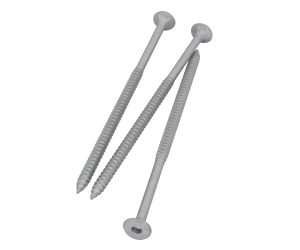
Introduction: Dacromet is a zinc-based flake coating technology. It is formed by dipping, drying, and baking to form an electroless deposition layer. Its coating structure is unique, and its anti-rust ability far exceeds that of ordinary galvanizing, especially its excellent salt spray corrosion resistance. The coating is thin and uniform, without the risk of hydrogen embrittlement, high temperature resistance (up to 300°C or more), and has strong bonding with screws. The appearance is usually matte silver gray or dark gray.
Main uses: Designed for extremely harsh environments, such as automobile chassis, engine peripheral fasteners, outdoor high-voltage transmission towers, bridge steel structure connections, marine engineering equipment, chemical facilities, and high-strength screws that are sensitive to hydrogen embrittlement.
3.Chrome Plating Screws
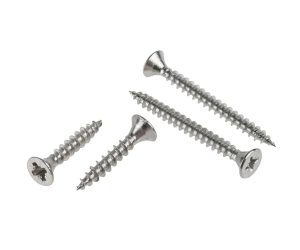
Introduction: The surface of the screw is extremely bright, mirror-like silver, and its wear resistance and corrosion resistance are better than ordinary galvanizing. This treatment can significantly improve the appearance and grade of the screw. The disadvantages are high cost and complex process. If the plating layer is damaged, the substrate is prone to rust, and it is not suitable for high-load friction environments.
Main uses: Mainly used in occasions that require outstanding appearance and certain rust resistance, such as high-end furniture hardware, bathroom accessories, display equipment, motorcycle/bicycle decorations, musical instrument accessories, and equipment surfaces that require cleanliness. The smooth surface is not easy to adhere to dirt. Its decorativeness is greater than heavy protection.
4.Nickel Plating Screws
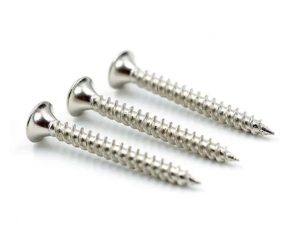
Introduction: The nickel plating layer provides good corrosion resistance, wear resistance and weldability. The appearance can be bright silver (bright nickel) or slightly darker silver-white (matte nickel). The nickel layer itself has good chemical stability and can resist corrosion from a variety of chemical media. It is often used as a base layer (such as copper + nickel + chromium) or alone. The cost is higher than galvanizing, and the rust resistance is better than zinc but weaker than Dacromet or stainless steel.
Main uses: Suitable for occasions that require moderate rust resistance, wear resistance or specific appearance, such as electronic product housing fixtures, small precision instruments, chemical equipment fasteners, components that need to be welded, and as functional coatings
5.Blackening screws / Black oxide screws (Black Oxide Screws)
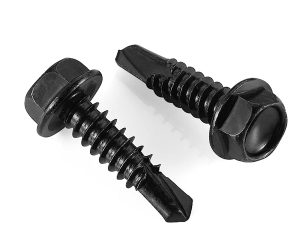
Introduction: This is a chemical conversion film process that produces a dense magnetic iron oxide (Fe3O4) film on the surface of the screw. The film layer is very thin and hardly changes the size of the screw. The main function is to provide basic rust protection and eliminate reflections (matte black appearance), and can slightly reduce friction. Its rust resistance is very limited, mainly relying on subsequent oiling or waxing to enhance. Low cost, simple process, no hydrogen embrittlement.
Main Applications: Widely used in internal mechanical structures with high dimensional accuracy requirements, matte/non-reflective requirements, and relatively dry environments, such as firearms, optical instrument interiors, machine tool parts, non-critical parts in automobile engine compartments, and tool fasteners that require a black appearance.
6.PTFE Coated Screws / Teflon Coated Screws (PTFE/Teflon Coating Screws)
Introduction: The surface of the screw is coated with a layer of polytetrafluoroethylene (PTFE, commonly known as Teflon)-based coating. Certain heat resistance (about 260°C) and additional anti-corrosion barrier. The coating usually has various colors (black, gray, brown, etc.). The disadvantage is that the coating may be scratched and the cost is high.
Main Applications: Designed for environments that require lubrication, anti-seizure, anti-sticking, chemical corrosion resistance or easy cleaning, such as food processing machinery, plastic injection mold fasteners, chemical reactors, high-temperature equipment, parts that need to be repeatedly disassembled, and semiconductors or medical equipment with extremely high cleanliness requirements.
7.Phosphate Screws
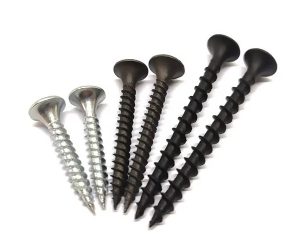
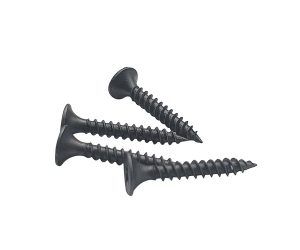
Introduction : A layer of insoluble phosphate crystal conversion film (usually zinc or manganese) is formed on the surface of steel screws through chemical treatment. The film layer is gray to black and has a microporous structure. The main function is to improve the rust resistance of the substrate (especially with subsequent oiling), enhance the adhesion of paint or lubricant, and provide a certain friction reduction effect. Its rust resistance is better than blackening but lower than galvanizing. Low cost.
Main uses: Commonly used in gypsum board ceilings or dry partition environments, and as a low-cost rust prevention solution for general mechanical equipment. Often used in combination with oil immersion.
Classification By Head Shape
1.Hex Head Screw
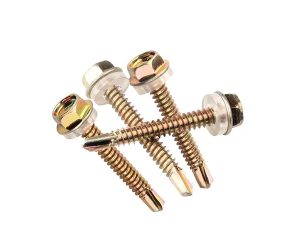
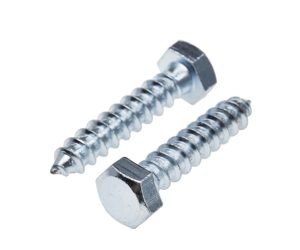
Introduction: The hexagonal head design provides six force-bearing surfaces, which can be applied at multiple angles with a wrench, socket or power tool, and is not easy to slip in high-torque scenarios. Its hexagonal head structure can withstand torque far exceeding that of ordinary screws, and is often used in industrial fields that require strong locking.
Scenario: Installation scenarios requiring high torque, roofs, guardrails, wind turbine tower flange fixation, heavy truck chassis beam assembly.
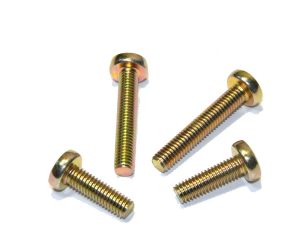
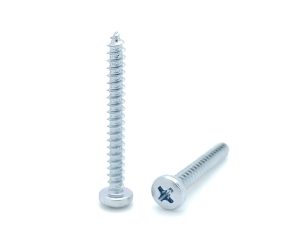
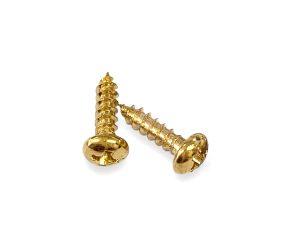
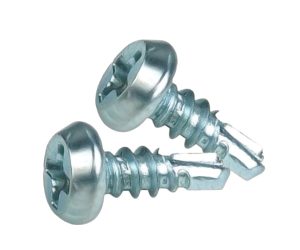
2.Pan Head Screw
Introduction: The design with a circular arc bulge on the top and a flat bottom can prevent the tool from slipping and avoid scratching the surface of the object. The cross or slotted notch can match unfamiliar tools to ensure that the screwdriver does not jump when biting, which is particularly suitable for rapid assembly on the assembly line.
Scenario: Fixing the internal heating module of the coffee machine, packaging the shell of the smart meter, and splicing the plastic shell of medical devices.
3.Truss Head Screw
Introduction: The head diameter is more than 40% larger than that of ordinary round head screws, dispersing the locking pressure like an umbrella. The thicker head height provides a larger contact area to prevent concave deformation on thin plate materials.
Scenario: Splicing of container corrugated plates, reinforcement of supermarket shelf layers, installation of safety guardrails for amusement facilities.
4.Wafer Head Screw
Introduction: The head thickness is only 1-2mm but has a wide load-bearing surface. This flat design achieves maximum coverage in a limited space. The 45° chamfer on the edge of the head can automatically align the installation hole to improve the sealing.
Scenario: Fixing of interior panels of high-speed rail carriages, edge processing of cold storage insulation layers, and assembly of shields on automated production lines.
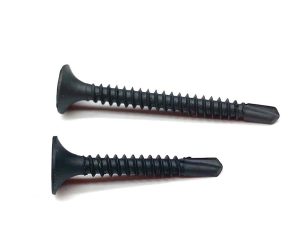
5.Bugle Head Screw
Introduction: It expands in a continuous trumpet shape from the tip to the head, and the top of the thread has a cutting groove. When screwed in, the conical head props up the material like a wedge, and the thread automatically opens a channel, eliminating the need for pre-drilling.
Scene: gypsum board, ceiling, light steel villa keel docking, anticorrosive wood platform construction, greenhouse film strip fixing.
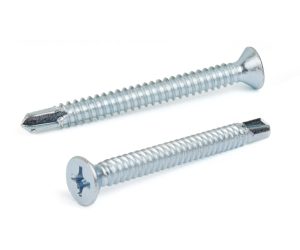
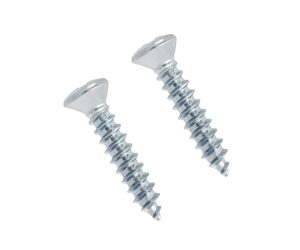
6.Flat Head Screw
Introduction: The precise 90° cone angle design allows the head to sink completely into the conical hole, and the surface is flat and without protrusions. The cross groove depth at the top of the head has been specially treated, and it is not easy to appear “bald” even if it is repeatedly disassembled and assembled.
Scene: mahogany furniture mortise and tenon reinforcement, microscope stage component installation, model aircraft wing skin fitting.
7.Oval Head Screw
Introduction: After sinking and installation, it reveals an elegant arc profile, which is both functional and decorative. The curvature of the head arc is ergonomically calculated, and there is no sharp feeling when touched. Common chrome or bronze surface treatment.
Scene: European cabinet brass handle fixing, violin neck connector, retro mailbox nameplate installation.
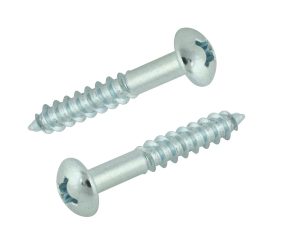
8.Round Head Screw
Introduction: The hemispherical head provides medium clamping force, and the bottom plane is in full contact with the material. The universal cross/slotted slot is compatible with most tools, and the arc edge avoids hooking the fabric, making it a common spare part for home repairs.
Scenario: Installation of training wheels for children’s bicycles, fixing of shelf partition brackets, and locking of cable clips in distribution boxes.
9.Dome Head Screw
Introduction: The high-arched dome design is 30% higher than the ordinary round head, and a decorative cover slot is reserved inside. The polished surface is combined with a streamlined shape to meet the load-bearing requirements while improving the visual texture.
Scenario: Encapsulation of instruments on the yacht’s driving platform, repair of seats in airport terminal halls, and reinforcement of medical cart armrests.
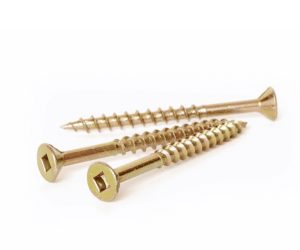
10.Countersunk Head Screw
Introduction: The cone angle tolerance is controlled within ±0.5°, which fits perfectly with the standard countersunk hole. The top of the head is slightly lower than the material surface to form a negative tolerance, leaving space for subsequent painting or film application.
Scenario: Assembly of carbon fiber spoilers for racing cars, debugging of ski bindings, hinge connection of CNC machine tool protective doors.
11.Trim Head Screw
Introduction: The head diameter is 20% smaller than that of conventional screws, and the sinking depth is only about 1mm. The micro cross slot is combined with anti-glare treatment, which is almost invisible on light-colored materials, meeting the needs of minimalism.
Scenario: Concealed installation and fixation of solid wood skirtings, reinforcement of corners of oil painting frames, and fine-tuning of invisible door rebounders.
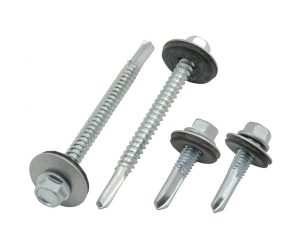
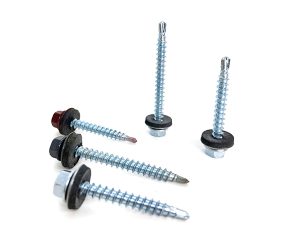
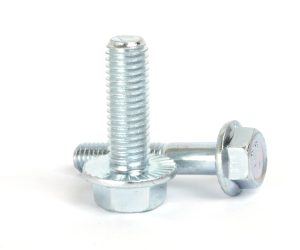
12.Hex Washer Head Screw
Introduction: The serrated washer formed in one piece under the head forms a mechanical self-locking with the surface of the bite material. The dual anti-torsion design of hexagonal drive and washer is more than 3 times more durable than ordinary screws in a vibrating environment.
Scenario: Anti-wind fixation of photovoltaic power station brackets, assembly of corn harvester blades, and maintenance of container terminal hoisting equipment.
13.Button Head Screw
Introduction: The low cylindrical head is combined with the hexagonal drive to achieve high torque output in a small space. The arc edge avoids stress concentration and is particularly suitable for debugging scenarios with frequent disassembly and assembly.
Scenario: UAV arm quick-disassembly structure, mechanical arm joint bearing fixation, off-road vehicle winch modification.
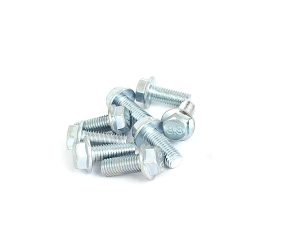
14.Flange Head Screw
Introduction: The serrated flange extending from the bottom edge of the head replaces the traditional gasket. During installation, the serrations are embedded in the material to form an anti-rotation lock. The ratio of flange diameter to head is mechanically optimized, and the pressure dispersion effect is better than that of a separate gasket.
Scenario: Forklift fork baffle adjustment, treadmill belt tensioning device, food processor blade fixation.
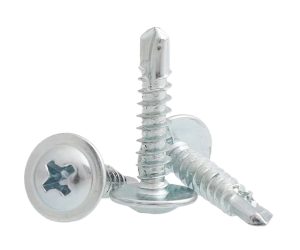
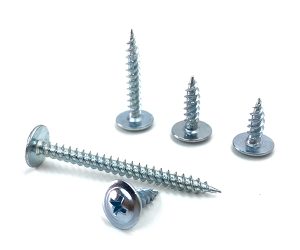
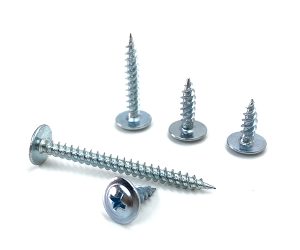
15.Pan Framing Head Screw
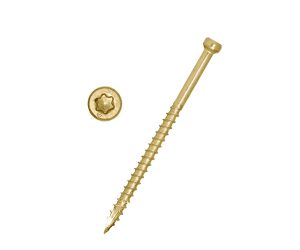
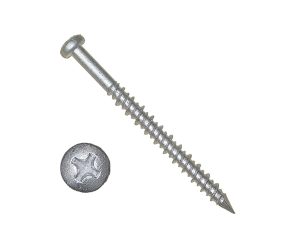
Introduction: The thickened dome head is equipped with self-tapping threads, and the thread height is 15% higher than that of ordinary screws. The heat treatment process enables the tip to directly penetrate the hardwood annual ring layer, eliminating the pre-drilling step.
Scenario: Glued wood beam-column roof truss connection, grape trellis antiseptic wood column fixation, logistics pallet repair and reinforcement.
Classification By Drive Type
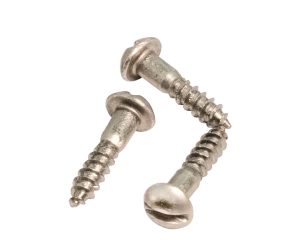
1.Slotted Screws
Introduction: The most traditional straight slot design, which can be operated with a flat screwdriver. The slot depth is shallow, and the torque change can be intuitively felt when tightening manually, but the power tool is prone to slipping and jumping. It is still irreplaceable when repairing old equipment.
Scenario: Repair of internal parts of antique clocks, adjustment of old woodworking planers, and fine-tuning of garden fence hinges.
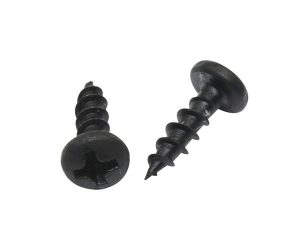
2.Phillips (PH) Screws
Introduction: The cross-shaped cross slot has a self-centering feature, and the electric screwdriver head can automatically absorb and position. The bevel design of the slot wall allows the cutter head to “pop out” when the preset torque is reached to prevent over-tightening and damage to the material.
Scenario: Rapid assembly of automotive interior panels, fixing of mobile phone motherboard brackets, and production of plastic toy assembly lines.
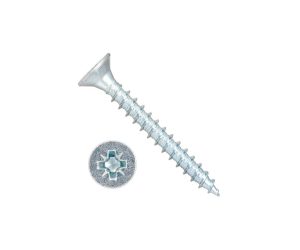
3.Pozidriv (PZ) Screws
Introduction: Add a 45° auxiliary slot line on the basis of the cross to form an eight-point contact. The cutter head engagement depth is increased by 30%, and it remains stable at high speeds, which is particularly suitable for high-torque impact drills.
Scenario: Locking of steel structure house purlins, fixing of ship decks, and removal of concrete formwork systems.
4.Hex Socket Screws
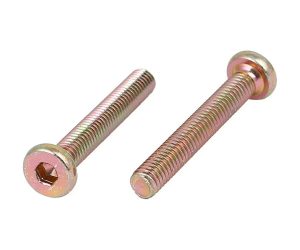
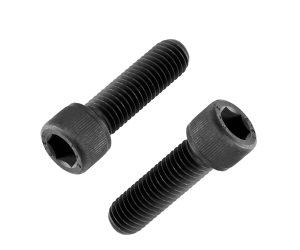
Introduction: The cylindrical head is embedded in the hexagonal hole, and the L-shaped wrench can apply force at multiple angles. The deep hole design accommodates the long arm of the wrench, and the lever-type strong tightening is achieved in a narrow space.
Scenario: Mountain bike shock absorber adjustment, industrial robot arm joint sealing, machine tool guide block leveling.
5.Allen Screws
Introduction: Often confused with hexagonal, it is actually a small-sized precision variant. The ball-head Allen wrench supports 25° tilt operation to solve the problem of dead-angle installation. Micron-level tolerance avoids thread stripping.
Scenario: Eyeglass nose pad adjustment screws, 3D printer hot end assembly, precision instrument lens bracket fixation.
6.Robertson Screws
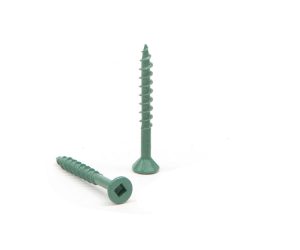
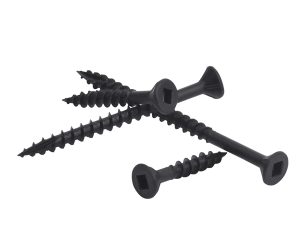
Introduction: The tapered square hole and the gradually thickened blade form a self-locking, and the screw can be suspended by one hand for construction. Unique anti-slip design can still bite reliably in oily environment, the first choice for North American woodworkers.
Scenario: outdoor anticorrosive wooden plank road construction, RV chassis waterproof sealing, high-voltage pole cross arm installation.
7.Square Screws
Introduction: The exposed square head is used with a wrench, and the four planes are evenly stressed. The corners are rounded to prevent the wrench from biting the metal surface. It is mostly used for heavy exposed structures.
Scenario: agricultural machinery plow connection, railway sleeper fastener fixation, mine conveyor belt roller replacement.
8.Hex Cap Screws
Introduction: The hexagonal head is matched with a flange surface or a washer, and the wrench force surface is higher than the thread. The heat treatment grade is usually above 8.8, and the bolt-level strength is used for key load-bearing points.
Scenario: wind turbine blade bearing fixation, bridge expansion joint anchoring, hydraulic press frame pre-tightening.
9.Spline Screws
Introduction: The head has a radial serrated groove, and the special sleeve has internal and external teeth that bite synchronously. The 12-tooth design disperses torque, eliminates the risk of rounded corner deformation, and has obvious anti-disassembly characteristics.
Scenario: Anti-theft fixation of subway car seats, packaging of military equipment boxes, and locking of internal modules of ATM machines.
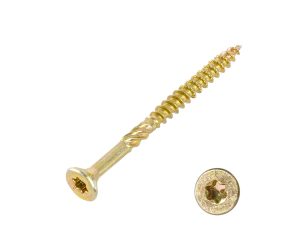
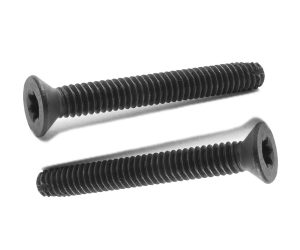
10.Torx Screws
Introduction: The hexagonal star-shaped groove increases the contact surface by 50%, and the torque transmission efficiency is 3 times higher than that of the cross groove. The curved groove wall eliminates the “cam effect”, and the power tool does not jump teeth at full power.
Scenario: Sealing of new energy vehicle battery packs, inspection covers for aircraft engine blades, and grounding of high-end home appliance circuit boards.
Classification By Thread Type
1.Machine Screw Thread
Introduction: 60° unified standard tooth angle, rounded thread top, precise meshing with prefabricated nut hole. Different from self-tapping thread, it requires perfectly matched pitch and diameter tolerance, and is as smooth as a key opening without bite marks when screwed in.
Scenario: CNC machine tool guide slider adjustment, precision optical instrument lens barrel assembly, industrial switch circuit board positioning column.
2.Tapping Screw Thread
Introduction: The end of the thread has a cutting edge, and when screwed in, it opens a material channel like a micro milling cutter. The pitch is 20% larger than that of machine thread, and the increased tooth height forms a strong chip removal groove, and wood/metal sheet does not need to be pre-drilled.
Scenario: Color steel plate roof fixing, air conditioning duct angle code connection, DIY metal bookshelf column assembly.
3.Coarse Thread Screw
Introduction: The large pitch design increases the single-turn feed rate by 1.5 times, and the groove depth can accommodate more debris. The reduction of thread contact surface reduces screw-in torque, which is particularly suitable for soft or fragile materials.
Scenario: Fixing expansion tubes in gypsum block walls, reinforcing drainage holes in red pottery flower pots, and anchoring foamed cement insulation boards.
4.Fine Thread Screw
Introduction: Small pitch brings more thread turns per inch, and micron-level bite accuracy achieves millimeter-level adjustment. Fine threads increase the contact surface by 30%, and the anti-loosening ability is better than coarse threads, but it needs to be used with thread glue.
Scenario: Engine cylinder head seal compression, microscope stage fine-tuning mechanism, high-end watch strap buckle adjustment.
5.Twinfast Screw
Introduction: Parallel double helix design, single-turn screw-in distance is twice that of ordinary screws. The two threads are offset by 1/2 pitch to form a continuous thrust, which increases the installation speed by 40% and is not easy to skew.
Scenario: Rapid construction of furniture exhibition booths, assembly of interior parts of automobile production lines, and batch installation of logistics warehouse shelves.
6.Hi-Lo Screw (high-low thread)
Introduction: A special tooth profile with alternating high and low pitches, with high threads responsible for cutting materials and low threads for chip removal. The tooth volume is 35% larger than that of conventional threads, solving the problem of plastic parts being stuck during installation.
Scenario: PVC drain pipe clamp fixing, car bumper plastic buckle repair, and children’s plastic toy joint reinforcement.
7.Fully Threaded Screws (full thread screw)
Introduction: The rod body is 100% covered with threads, and there is no transition zone for the smooth rod. Effective engagement can be achieved at any position, which is particularly suitable for occasions where the locking depth needs to be adjusted, but the shear resistance is weaker than that of half threads.
Scenario: U-shaped card adjustment of pipe brackets, universal clamping rods of experimental equipment, and edge strips of greenhouse film.
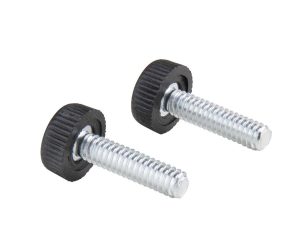
8.Knurled Screw (knurled screw)
Introduction: The thread area suppresses the diamond knurling pattern, and the pattern squeezes the material to form a physical lock when screwed in. The knurling depth of 0.1-0.3mm produces a microscopic barb effect, which can maintain 70% locking force even if the adhesive falls off.
Scenario: Anti-slip fixation of dumbbells in gyms, anti-loosening of shaft sleeves of rotating platforms in amusement parks, and anti-retraction of vibrating parts of agricultural machinery.
9.Partially Threaded Screws
Introduction: The length ratio of the smooth rod section to the threaded section is usually 1:1. The smooth rod section bears the shear force, and the threaded section focuses on providing clamping force. The arc treatment of the transition zone avoids stress concentration fracture.
Scenario: Installation of load-bearing shafts for door and window hinges, fixing of bicycle front fork steerer tubes, and pressure-resistant sealing of hydraulic cylinder end covers.
Classification By Point Type
1.Self Tapping Screws
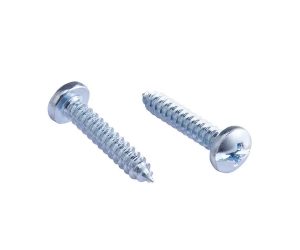
Introduction: Its characteristic is that the thread is designed to be particularly sharp. It can “cut” its own thread directly on the relatively soft material like a knife when screwing in, eliminating the trouble of pre-tapping. The screw tip is generally pointed or has a self-tapping shape.
Application scenario: Fix thin iron sheets and aluminum plates on wooden frames or metal frames
Install plastic baffles and vent grilles on walls or equipment.
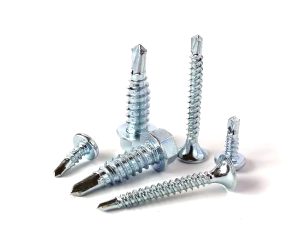
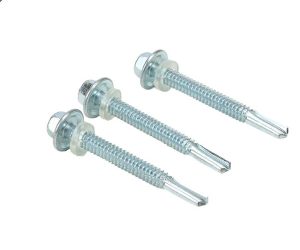
2.Self Drilling Screws
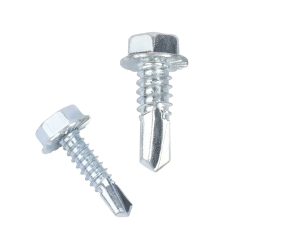
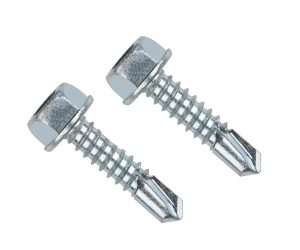
Introduction: Its screw tip is directly made into a small drill bit! This means that during the screwing process, it can drill a hole in the hard material by itself without drilling, and then the threaded part behind it will tap the thread. Drilling and tapping are all done in one operation, which is very convenient. The small drill bit at the end of the screw is its symbol.
Application scenario: Fix color steel tiles and metal wall panels to steel keels, and install light steel keel partitions or ceilings.
3.Sharp Point Screws
Introduction: The head of this screw is a very sharp point. This design allows it to easily “pierce” into the material, playing a role in preliminary positioning and guidance, and is particularly suitable for relatively soft and easy-to-drill materials. It reduces the chance of the screw slipping and deviating, making it easier to screw.
Application scenarios: Most commonly used in various wood screws, screwing into solid wood, pine, plywood, etc. is very smooth. Assemble plastic models, fix plastic shells or parts.
4.Blunt Point Screws
Introduction: In contrast to the pointed head, the tip of the blunt head screw is flat or slightly blunt. You need to drill a “guide hole” of the right size in the target material in advance. Its task is to accurately enter the hole and then rely on thread engagement to fix it. This design is often used for machine screws or scenarios that require precise matching to prevent material splitting.
Application scenarios: Machine screws are screwed into nuts or pre-threaded holes.
When installing on hardwood or fragile materials (such as tiles and thin and brittle wood boards), drilling holes first and then using blunt-head screws can effectively prevent the material from cracking or chipping.
5. Tek Point Screws (Tek Point Screws)
Introduction: Tek Point (often written as TEK®) is actually a specific and very common pointed type of self-drilling screw. Its screw tip is a short, sharp, angular drill bit shape, usually with a clear cutting edge. This design is very efficient when dealing with thin to medium-thick steel plates, and is a “workhorse” on construction sites and metal processing. People often refer to “self-drilling screws” with Tek tips.
Application scenarios: Most commonly used in self-drilling and self-tapping screws, used to fix thin steel plates to steel beams or steel frames (construction, industry). Install metal roof panels and wall panels.
6. Type 17 Screw (17-type screws)
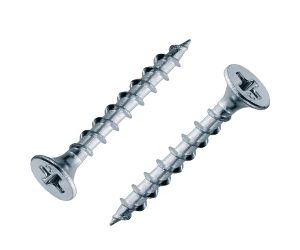
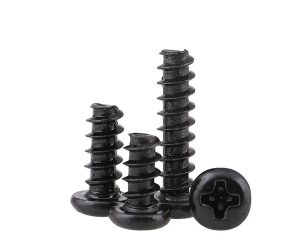
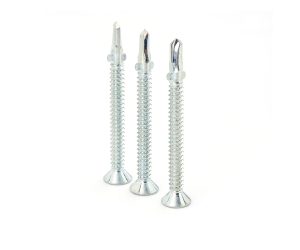
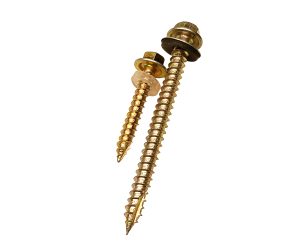
Introduction: Type 17 is mainly popular in North American woodworking and construction fields. It specifically refers to the design standard of the tip of a wood screw. The tip of this screw is not a simple tip, but a short, planer-like groove (notch) below the start of the thread. This design is very clever: it can “scrape” off a little wood fiber in advance when the screw is screwed into the wood, making room for the subsequent threads, greatly reducing the risk of the wood being split, while making screwing easier and faster.
Application scenario: Designed specifically for wood, widely used in various wood structure connections.
It can effectively prevent cracking when assembling solid wood furniture, especially when connecting hardwood parts or close to the edge of wood.
Classification By Standard
1. ISO Screw (International Standard Screw)
Introduction: A universal screw specification developed by the International Organization for Standardization, characterized by strong global interchangeability. The pitch and head size are unified and highly versatile.
Core scenarios: export equipment assembly, multinational enterprise production lines, cross-border e-commerce repair parts
2. DIN Screw (German Industrial Standard Screw)
Introduction: A representative of German precision, with a tolerance three times stricter than ISO. The biggest feature is the hex socket on the head, which has super anti-slip ability.
Core scenarios: precision instruments, inside automobile engines, and pressure-bearing parts of heavy machinery (hydraulic press connecting rod fastening)
3. GB Screw (China National Standard Screw)
Introduction: China’s practical standard design, 20% lower cost than ISO but up to standard strength. Metric threads are the main ones, and the head is mostly cross-slotted (PH2 standard).
Core scenarios: infrastructure projects, internal fixation of home appliances (air conditioning compressor screws), municipal facilities (street lamp bracket anchoring)
4. JIS Screw (Japanese Industrial Standard Screw)
Introduction: Very fine standard, anti-loosening design is the feature. Common integrated structure with washers, seismic performance crushes the same level.
Core scenarios: electronic products, precision machine tools
5. BS Screw (British Standard Screw)
Introduction: British thread standard, unique design of 55° thread angle. Commonly used material is BSF high-toughness steel, which has strong corrosion resistance.
Core scenarios: Marine equipment (Rolls-Royce marine engine) Agricultural machinery (Case tractor British accessories)
Classification By Application
1.Wood Screw
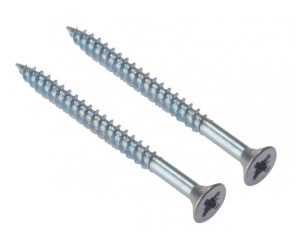
Introduction: Wood screws are the most frequently used screws when we usually repair at home. Its thread is relatively deep and the spacing is wide. The biggest feature is that the screw tip is very sharp, and the head usually has a cross groove or a slot. It is designed to easily “bite” into the wood and tighten it more and more.
Application scenario: Home DIY, assembling purchased flat furniture, such as bookcases, tables and chairs.
Fix the wooden floor at home, decorate the wood lines or repair loose wooden door hinges.
2.Metal Screw
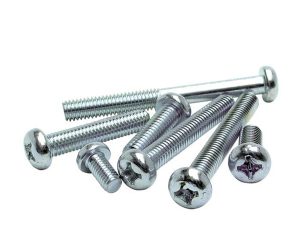
Introduction: Metal screws, also called machine screws, feel completely different from wood screws. Its threads are finer and more uniform, and the screw tip is usually flat or blunt (need to be drilled first). They are usually used with nuts, or screwed into pre-tapped threaded holes on metal parts, and the connection accuracy requirements are higher.
Application scenario:
Fix the housing of electrical appliances, assemble metal frames, shelves or various parts of fitness equipment.
Fasten metal panels, brackets or parts together in the factory.
3. Construction Screw
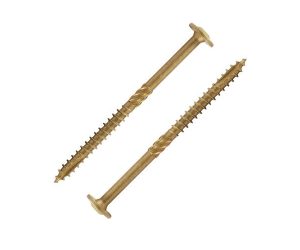
Introduction: Construction screws are much thicker than ordinary wood screws, and the threads are designed to be particularly strong and durable, providing super strong pulling force. Many are also rust-proofed and can withstand wind and rain.
Application scenarios: Building wooden structural frames of houses, such as wall bones and roof trusses.
Fixing the load-bearing beams of terraces and the keels of stairs.
4. Furniture Screw
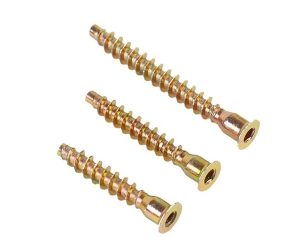
Introduction: It is usually slender and has a small screw head (such as countersunk or round head). After tightening, it can be hidden inside the furniture or covered with a decorative cover. The design must ensure the connection strength while avoiding damaging the beauty of the furniture surface.
Application scenarios: Assembling internal structures such as wardrobes, cabinet back panels, drawer slides, etc.
Fixing tabletops and table legs, the screw holes are often hidden in places that are not easy to see.
5. Roofing Screw
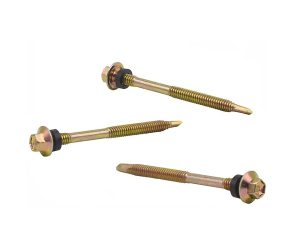
Introduction: Roofing screws are screws specially designed for roof installation and maintenance. The biggest feature is that it comes with a large flat head or hexagonal head with a rubber gasket. This gasket is the key. After tightening, it can be pressed tightly on the roof panel (metal tiles, color steel plates, etc.) to form a waterproof seal to prevent rainwater leakage.
Application scenario: Install metal roof tiles and color steel tiles on the purlins of the roof. Fix the solar panel bracket on the roof.
6. Drywall Screw
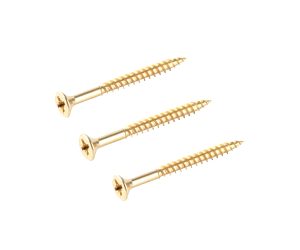
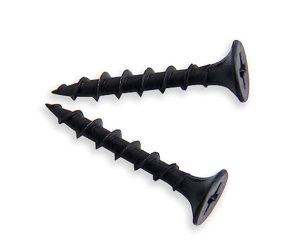
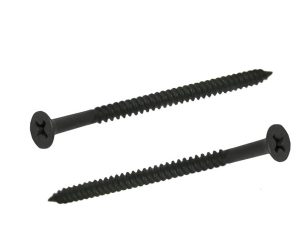
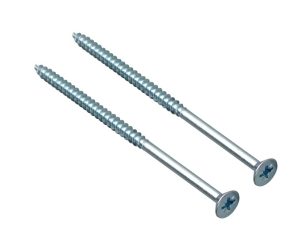
Introduction: Gypsum board screws (also called drywall screws) are specially designed for fixing gypsum board to wooden keels or light steel keels. It is very thin, the screw tip is sharp like a cone, and the thread is very dense. The screw head is trumpet-shaped (countersunk head), and after screwing it in, it can be “buried” under the surface layer of the gypsum board, which is convenient for subsequent putty leveling, and the screw head is completely invisible.
Application scenario: Install gypsum board (drywall) on the keel of the wall or ceiling in home decoration. Fix sound insulation board and fireproof board to the frame structure.
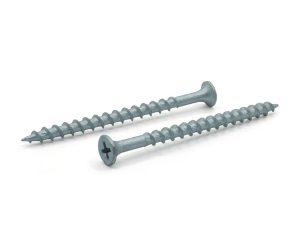
7. Deck Screw
Introduction: Deck screws are the preferred screws for outdoor wooden structures (especially decks). They must be very rust-proof (commonly plated or stainless steel), and the thread design can provide strong clamping force to prevent the board from warping and loosening. The screw head is usually star-shaped (Torx) or square, which is convenient for strong tightening, and it is a countersunk design that can be “hidden” below the surface of the board.
Application scenario: Laying and fixing the wood boards of the deck and balcony to the keel.
Build outdoor wooden platforms, wooden bridges, and wooden plank roads.
8. Machine Screws
Introduction: It is not the same as the screws we mentioned above. Machine screws are usually full-threaded, with various screw heads (round heads, flat heads, cylindrical heads, etc.) and flat screw tips. It must be used with nuts or screwed into holes that have been pre-threaded (tapped). The emphasis is on precise fit and removability.
Application scenario: Fixing parts such as gears, pulleys, and handles to the shaft of the machine.
Assemble the metal casing or internal bracket of electronic equipment.
9.Concrete Screws
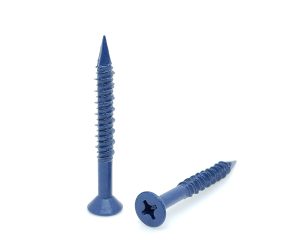
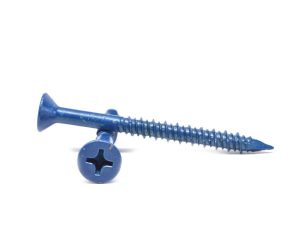
Introduction: Concrete screws are fasteners specially used for hard substrates such as concrete, bricks, and blocks. It is very hard and usually made of carbon steel or alloy steel. The thread is deep and special. The screw tail is self-drilling like a drill bit or needs to be drilled first and then self-drilled. The tail often has a special design (such as ribs) to help discharge drilling debris.
Application scenarios: Install fixed brackets, hanging picture strips, and wire troughs on cement walls or brick walls.
Fix door frames and window frames to concrete door and window openings.
10.Chipboard Screw
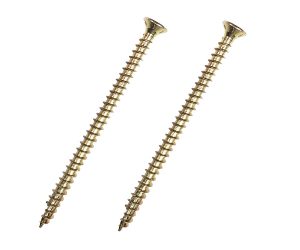
Introduction: Chipboard screws (or panel furniture screws) are screws designed for artificial boards such as density boards, particle boards, and European pine boards (OSB). It usually has a double thread design (the thread near the screw tip is thicker), which can “bite” into the board faster, while dispersing the pressure when screwing in, greatly reducing the risk of board edge cracking. The screw head is also a countersunk design.
Application scenarios: Assembling various panel furniture, such as wardrobes, bookcases, and TV cabinets.
Installing cabinets and shelves (especially particleboard or medium-density fiberboard).