Hey there! If you’ve ever found yourself staring at two boxes of drywall screws—one with coarse threads, one with fine—wondering which one to grab, you’re not alone. This is one of those classic “get it right or pay later” choices. From where we stand at the factory, it’s not just a detail—it’s the difference between a rock-solid install and a callback.
Let’s break it down, no fluff.
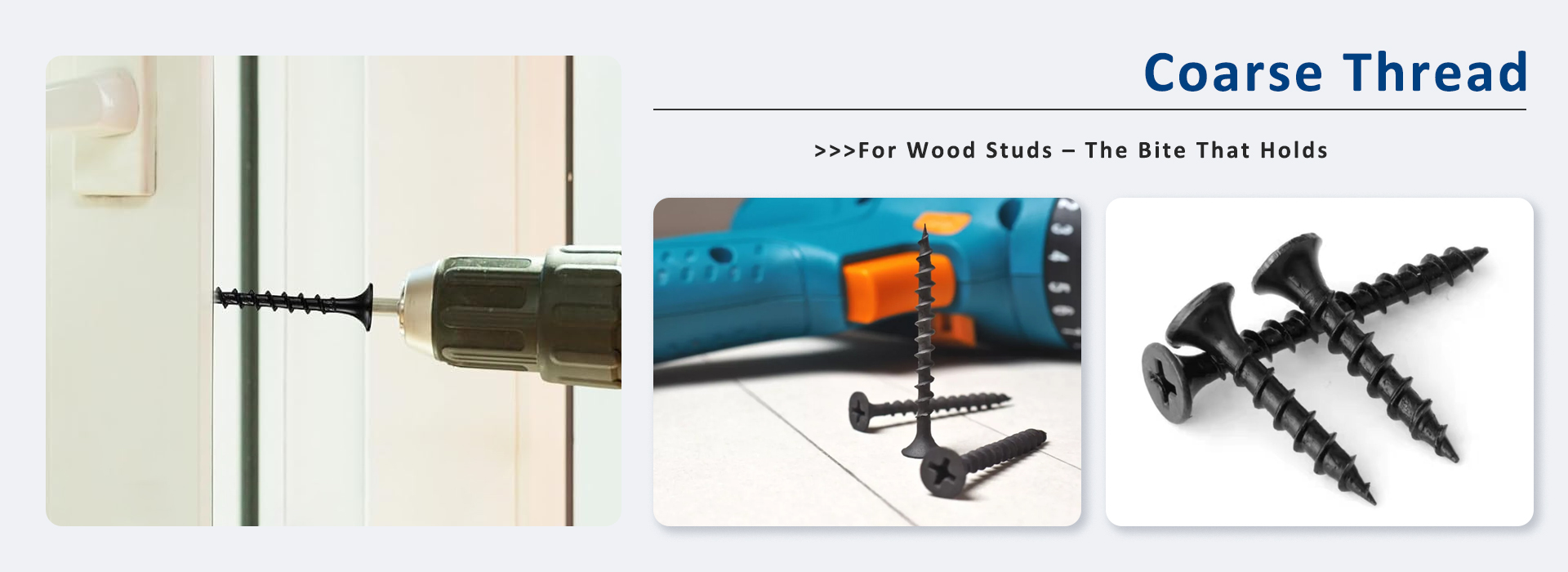
Coarse Thread: For Wood Studs – The Bite That Holds
Coarse-thread drywall screws are your go-to for wood studs. They’ve got wider, deeper, and more aggressive threads designed to dig into wood fibers without splitting the stud. The threads act like tiny hooks, pulling the drywall tight against the wood and holding it there—for good.
We make these with a sharp point so they start fast in wood, and the wider spacing prevents clogging with material. If you’ve ever tried using a fine thread screw in wood, you know it doesn’t grab well. It might seem okay at first, but over time, it can back out or fail to compress the drywall fully. Not what you want.
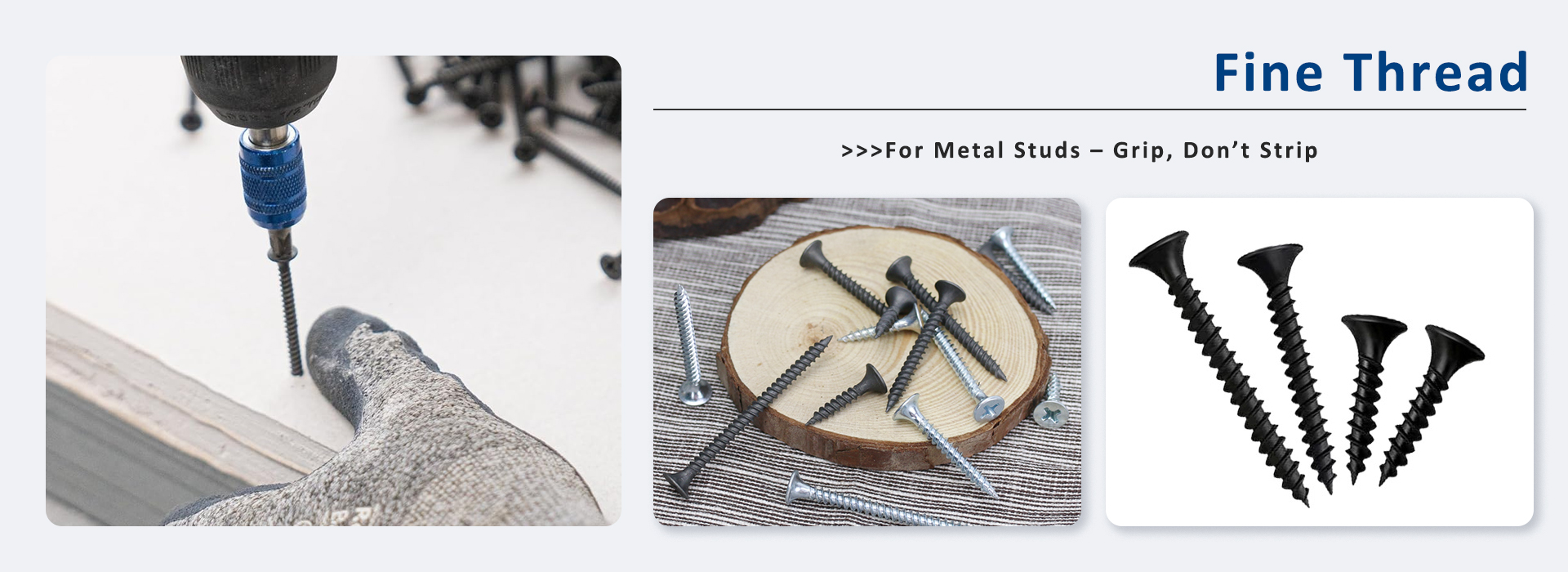
Fine Thread: For Metal Studs – Grip, Don’t Strip
When you’re attaching drywall to metal studs, fine-thread screws are the only way to go. Their closely spaced threads create more contact points with the thin steel, which means better grip and far less risk of stripping out. Metal won’t compress like wood—it’s all about precision.
These screws also come with a self-drilling tip, so you don’t need to pre-drill. They’re hardened through heat-treatment to stay strong when driving into abrasive steel. Using a coarse thread here is a classic mistake—it’ll chew up the metal, sit loose, and likely lead to sagging or screw pops down the line.
Why Can’t You Swap Them?
We get this question a lot. “Can’t I just use coarse for everything?” Short answer: no.
Coarse in metal: poor grip, stripped holes, unhappy customers. Fine in wood: weak holding power, poor compression, more screws needed.
It might seem like a small thing, but the wrong thread type can turn a clean job into a repair nightmare.
Where in the World Are These Screws in Demand?
This is where it gets interesting. Different markets need different screws based on how they build.
US & Canada: Big demand for coarse threads. Why? Wood framing dominates houses and low-rises. Every hardware store from Home Depot to local suppliers moves these by the pallet. Europe & UK: Metal studs are standard in commercial and multi-family builds. Fine thread screws rule here—especially Pozi-drive versions. Middle East (UAE, Saudi): All about high-rises and commercial jobs. Metal studs everywhere = major fine thread demand. Australia: Like the US, wood construction is common in homes, so coarse threads are widely used. China & SE Asia: Huge mixed use—fine thread for cities and high-rises, coarse for suburban and rural construction.
As a factory, we’re constantly adjusting production to feed these markets. It’s not one-size-fits-all—it’s what fits the build.
The Takeaway? Match the Thread to the Material.
Keep both types on hand. It’s that simple.
Wood studs? Coarse thread. Metal studs? Fine thread.
Do that, and you’re golden.
Still unsure which one your project needs? Reach out—we help pros and DIYers every day get it right. No guesswork, just good advice.
—Factory team out.