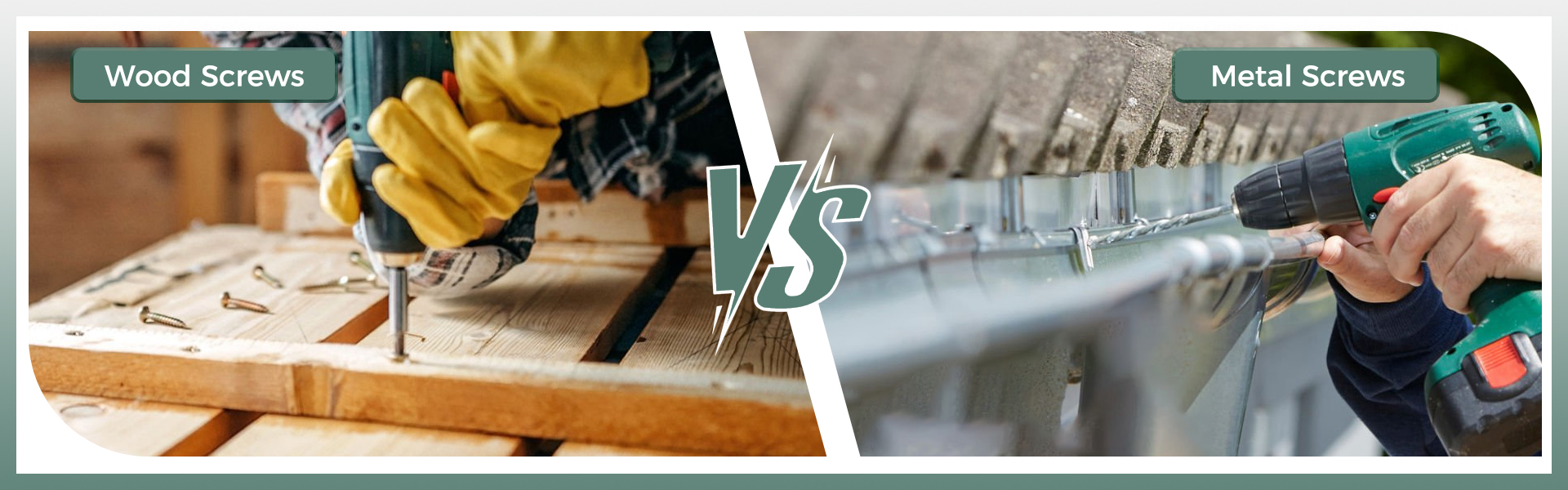
When you purchase screws for a project or need to buy screws in large quantities for sale, it is very important to choose the right type of screws, which directly affects your profits and the overall quality of the project. Although Wood Screws and Metal Screws are the most commonly used screws in sales and engineering, and sometimes they are occasionally used cross-over, there are great differences between the two screws in thread design, screw tip shape, and applicable scenarios: Wood screws usually use a deep and wide coarse thread design, which can firmly grasp the wood fibers, while most metal screws have a fine thread design, which can better bite the metal surface to prevent slipping. This article will explain the key differences and selection suggestions between the two screws, which can help you avoid common selection and usage errors, ensure that your project stands the test of time, and help you maximize sales profits.
Basic Concepts
What are wood screws?
Wood screws are also called carpentry screws and wood self-tapping screws. They are similar to machine screws, but the threads on the screw are special wood screw threads. The coarse threads can improve the grip and can be screwed directly into the wood. The unthreaded section near the head is used to press the wood to prevent over-screwing. The self-tapping pointed design can drill into soft wood without pre-drilling, and is often used for furniture installation and wood structure connection.
What is a metal screw?
Metal Screw, also known as sheet Metal Screw, is a fastener designed specifically for connecting sheet metal to metal, plastic, fiberglass, wood, or other materials. Its thread is a fine thread to enhance the bite accuracy with the metal substrate.
Key Differences
1. Thread Design (Core Difference)
Wood screws:
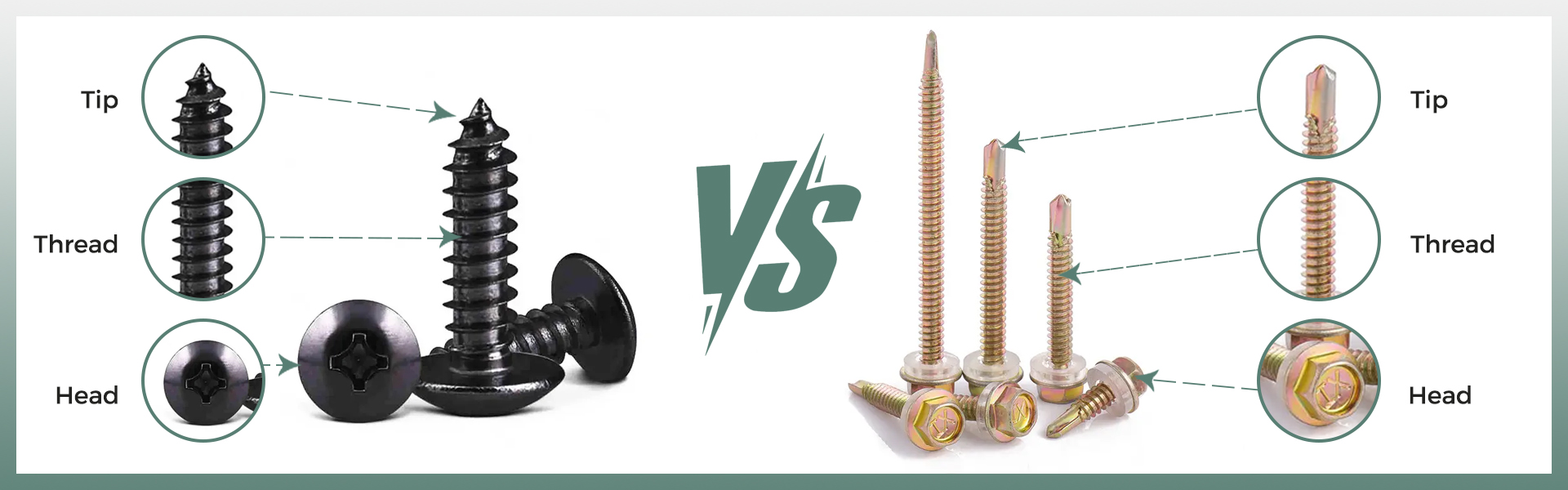
Coarse thread design (8-12 TPI) :The thread density is low (8-12 threads per inch), characterized by deep threads and wide grooves, which are designed for wood. When the screw is screwed into the wood, the wide and deep threads can be strongly embedded in the wood fibers, forming a similar anchoring effect. The friction between the threads and the fibers effectively resists loosening. In addition, the larger pitch of the coarse thread reduces the rotational resistance, making it quick to install in soft or hard wood, especially suitable for scenes requiring high tensile strength, such as furniture assembly and wood structure connection.
Metal screws:
Fine thread design (24-32 TPI) :Fine thread screws have a high thread density (24-32 threads per inch), shallow and dense threads, and are designed for homogeneous hard materials such as metal and plastic. In metal or plastic, shallow threads can achieve more uniform stress distribution by increasing the contact points per unit area, avoiding cracking or deformation of the material. The fine thread can also achieve more precise bite, dispersing external forces through multiple points of contact in a vibrating environment, thereby reducing the risk of loosening.
2.Head And Tip
Wood Screws:
Sharp tip design:The tapping screw’s pointed head design features a tapered profile and aggressive cutting edge, combining a 25-30° penetration angle with a micro-groove design that allows for self-thread formation during installation, increasing penetration speed by 35% compared to standard tapping screws
Common head types: Flat Head, Round Head.
Metal Screws:
Self-drilling drill bits (such as #2, #3, #4, #5) :Self-drilling drill bits achieve direct drilling without pre-drilling by integrating the drill tip design. It can quickly penetrate the material surface and simultaneously complete thread cutting while rotating. Taking different specifications such as #2 to #5 as an example, the larger the model, the stronger the drill diameter and bearing capacity, and can be used for boards or combinations of different thicknesses.
Common head types: Pan Head, Hex Head.
3.Strength And Use
| Comparison Item | Wood Screw | Metal Screw |
| Tensile Strength | Medium (suitable for wood load-bearing) | High (suitable for metal structures) |
| Shear Strength | Low (easy to break under lateral force) | High (preferred for mechanical connection) |
| Application | Furniture, wood frames, floors | Steel structures, electrical appliances, automobiles |
4.Surface Treatment And Rust Prevention
Wood screws:
Carbon steel + galvanized coating :The carbon steel substrate is combined with the basic galvanizing process to form a zinc protective layer on the surface by electroplating or hot-dip plating. This type of coating has moderate rust prevention performance and can resist moisture, weak acid or salt spray erosion in daily environments. It is suitable for indoor furniture, hardware in dry environments or short-term outdoor scenes (such as temporary brackets). The galvanized layer has low cost and mature technology. It is an economical rust prevention solution.
Applicable: Indoor or short-term outdoor use (such as furniture, wooden houses).
Metal screws:
Carbon steel +nickel plating/Dacromet coating :The carbon steel surface adopts electroplating nickel or Dacromet (zinc-chromium coating) process to significantly improve the corrosion resistance level. The nickel plating layer can isolate the metal nickel from oxygen and moisture, and the surface is smooth and hard, with excellent acid and alkali resistance and wear resistance. The coating life of the two processes is 3-5 times higher than that of basic galvanizing, but the cost is higher, and it needs to be selected according to the actual situation.
Applicable: High humidity, salt spray environment (such as seaside buildings, auto parts).
How To Choose Wood Screws Or Metal Screws?
1. Type Of Connected Materials
Choose wood screws:
- In solid wood furniture manufacturing, their thick, deep thread profile mechanically interlocks with wood fibers, resisting shear forces during deformation stresses, making them ideal for joining mortise and tenon joints in hardwood frames or securing tabletops to table legs.
- For wood flooring splices, screws with a blunt-head design (90-100° penetration angle) and a crack-resistant shank prevent surface cracking in tongue-and-groove flooring systems, especially when fastening engineered wood panels to subfloors subject to seasonal humidity changes.
- In wood-to-soft material joining applications, such as fastening plastic edgebanding to medium-density fiberboard (MDF) cabinets or MDF to wood studs, the coarse threads provide a secure grip on porous wood
Choose metal screws:
- Thin plate splicing: used to connect galvanized steel plates and aluminum alloy plates with a thickness of ≤3mm, penetrating the material and forming matching threads through self-tapping thread forming technology (no pre-drilling required).
- Frame rigid connection: using flange head or hexagon head metal screws with flat washers to achieve an axial clamping force of 20–35 N·m to resist loosening caused by dynamic loads.
- Metal and hard non-metal composite connection: used to fix metal brackets and wear-resistant plastic parts
2. Load strength and environment
Wood screws:
Generally used for light to medium loads (such as bookshelves, wooden decorations).
Commonly used in static environments without continuous vibration or impact
Metal screws:
High load/high strength requirements (such as steel structures, robotic arms).
Suitable for dynamic environments, such as automobile chassis and wind vibration resistance of outdoor equipment.
Common Mistakes and Professional Advice
Mistake 1: Using metal screws to fix wood is stronger.
Problem: The fine threads of metal screws have a weak grip on wood and are easy to loosen.
Mistake 2: Wood screws can drill through thin metal.
Problem: The pointed tip of wood screws is only suitable for wood, and forcing it to drill metal will cause the tip to break.
Mistake 3: Self-tapping screws = universal screws.
Problem: Self-tapping screws are divided into wood/metal-specific, and mixing them will easily fail.
Mistake 4: Not pre-drilling (hardwood/thick metal)
Problem: Forcing the screw in causes the screw to break or the material to deform.
Mistake 5: Mixing drive tools
Problem: Using a Phillips screwdriver to tighten a Torx screw, the notch is damaged.
Conclusion
Wood screws bite wood, metal screws bite gold, choosing the wrong one will ruin the project, choosing the right one will guarantee it for ten years!