Choosing the wrong screws = ruining your project! Have you ever used the wrong self-drilling or self-tapping screws, causing thread stripping or drill bit breakage? This article will show you how to distinguish between the two in 3 minutes, including metal or wood installation, and reveal the secrets of professional selection that never go wrong, so you can say goodbye to customer complaints and material waste.
Understand The Two Types Of Screws
What Are Self Drilling Screws?
The characteristic of self drilling screws is that the tail is in the shape of a drill bit. It does not need to pre-drill holes. It can drill, tap and tighten on the installation material in one go, which greatly saves construction time. The drilling capacity can penetrate 0.5mm~6mm thick metal.
They are commonly used in metal, wood, and composite materials, providing a fast, one-step installation solution.In addtion,Self-Drilling Screw is often informally referred to as Tek Screw in some industries or regions, especially in North America.
Common size of self drilling screws are :#6(3.5MM),#7(3.9MM),#8(4.2MM),#10(4.8MM),#12(5.5MM),#14(6.3MM),the specific length can be selected according to the actual use, or customized.
In order to meet different installation requirements, self drilling screws have a variety of head types for you to choose from. For example, when installing a metal roof, you can use a hex head self drilling screw. When installing cabinet panels or plastic parts, you can choose a pan head self drilling screw. According to different installation scenarios, you can also choose Truss head, CSK Head, Round head, wafer head, Flat Head, etc.
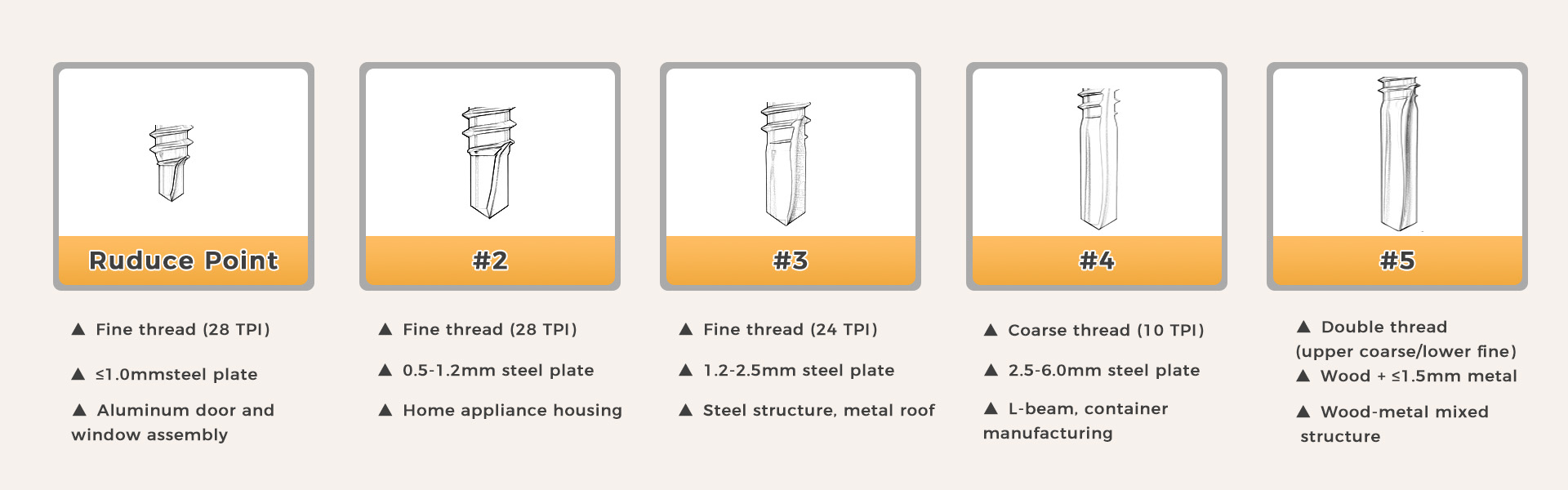
Core Features Self Drilling Bit Types And Parameter Comparison Table
Drill Bit Type | Thread Type | Material Thickness | Typical Application |
Ruduce Point | fine thread (28 TPI) | ≤1.0mmsteel plate | Aluminum door and window assembly |
#2 | fine thread (28 TPI) | 0.5-1.2mm steel plate | home appliance housing |
#3 | fine thread (24 TPI) | 1.2-2.5mm steel plate | steel structure, metal roof |
#4 | coarse thread (10 TPI) | 2.5-6.0mm steel plate | I-beam, container manufacturing |
#5 | double thread (upper coarse/lower fine) | Wood + ≤1.5mm metal | wood-metal mixed structure |
What Is Self Tapping Screw?
Self-Tapping Screws, also known as Tapping Screws or Metal Screws, are fasteners with a sharp tip at the front end of the screw. They are characterized by a sharp thread design and a self-tapping tip. No pre-tapping is required, but pre-drilling is usually required to ensure accurate installation. Suitable for a variety of materials such as metal, plastic, wood, etc.
Its common specifications are #6 (3.5MM), #7 (3.9MM), #8 (4.2MM), and #10 (4.8MM). The length of the screw is 13-150MM, and it can also be customized based on special usage scenarios.
The head type of the screw is almost the same as the self drilling screw ,The most commonly used ones are pan head and flat head self tapping screw.
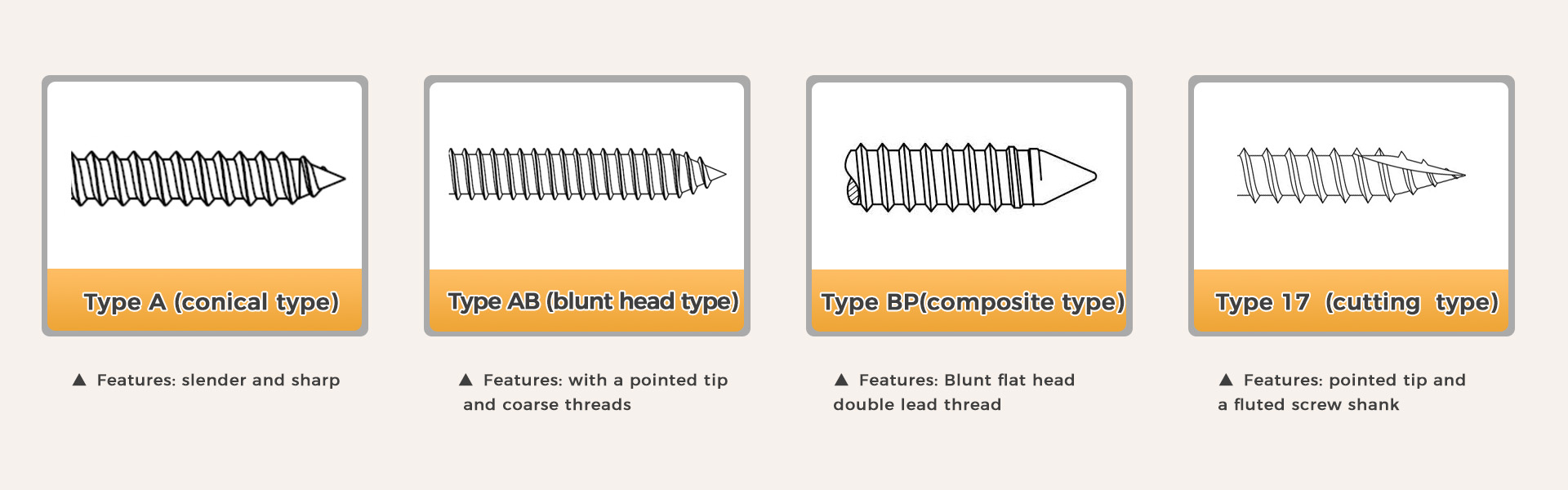
Self-Tapping Point Types and Applications
- Type A (conical type)
Features: slender and sharp, suitable for soft metals (aluminum, copper) and plastics.
Applications: electronic equipment, plastic molds.
- Type AB (blunt head type)
Features: A combination of Type A and Type B, with a pointed tip and coarse threads ,For thin sheet metal and wood
Applications: sheet metal parts, wood
- Type BP(composite type)
Features: Blunt flat head + double lead thread
Applications: automotive parts, home appliance assembly.
- Type 17 (cutting type)
Features: pointed tip and a fluted screw shank,Can penetrate wood + thin metal at the same time
Applications: Outdoor projects, antiseptic wood and light steel frame connection
Self-Drilling and Self-Tapping Screws: Key Differences Explained
Self-Drilling screws come with their own drill bit and can be used to drill and tap directly. They are suitable for hard materials such as metal and can be installed in one step, saving time. Self-Tapping screws, on the other hand, require pre-drilling and are only responsible for cutting threads. They are more suitable for wood, plastic or pre-drilled metal parts, with lower costs but more steps.
Comparison Items | Self Drilling Screw | Self Tapping Screw |
Core Features | With drill bit, can drill + tap (one-step operation) | Can only tap, need to pre-drill (two-step operation) |
Tip Type | Integrated drill bit (such as #2/#3/#5 models) | Sharp Point (such as Type A/B/BF/17), no drill bit |
Pre-Drilling Requirements | Not required | Required (pilot holes must be drilled first for hard materials) |
Applicable Materials | Metal , thin wood board | Metal, plastic, wood (matching thread type required) |
Installation Speed | Very fast (no drilling step required) | Slow (tool switching required) |
Thread Design | Typically fine thread (to prevent metal from loosening) | Coarse thread (wood/plastic) or fine thread (metal) |
Cost | Higher | Lower |
Applicable Materials | Metal , thin wood board | Metal, plastic, wood (matching thread type required) |
Top 5 Mistakes & How to Fix Them
Choose the Wrong Screw Type
Error: When drilling thick iron with a self tapping screw without pre-drilling holes
Fix: For metal >1.5mm, use self-drilling screws (e.g., #3 or #5 point)
Error : Drilling directly into hard steel (resulting in broken/slipped teeth)
Solution: Choose a #5 drill bit model that can penetrate steel up to HRC 45.
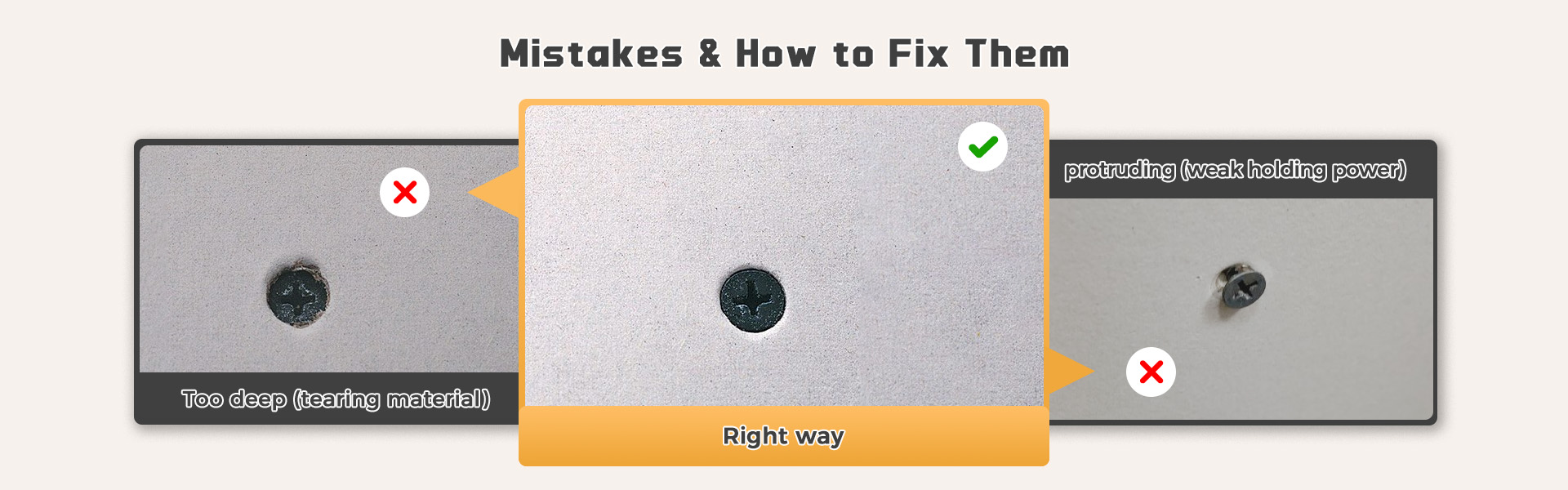
- Screws driven in too deep or too shallow
Error: Screw head too deep (tearing material) or protruding (weak holding power).
Solution: Adjust drill clutch; screw head should be 1 mm below the surface.
- Ignoring material compatibility
Error: Using coarse threads on metal (causing stripping).
Solution: Choose the right thread for the material – fine threads for metal, coarse threads for wood/plastic.
- Ignoring corrosion protection
Error: Using black phosphate screws in wet areas (rusts quickly).
Solution: Use galvanized or stainless steel screws in bathrooms/outdoors.
- Reusing old holes
Error: Loose screws in worn holes.
Solution: Move screws 1 cm away or use wider/longer screws.
Whether you choose Self-Drilling or Self-Tapping screws, the key is to accurately match them according to material properties (metal/wood/plastic) and construction conditions (pre-drilling requirements, installation efficiency) – Self-Drilling has become the first choice for metal roofs and steel structure projects with its drilling and tapping advantages, while Self-Tapping is irreplaceable in the fields of electronic assembly and woodworking due to its economy and precise thread control. Now you’ll never mix up these screws again!
Sinsun’s full range of screws provides professional solutions, making your choice safe and assured, and your project efficient and reliable.