Screws are the core fasteners for assembling and fixing objects. Damage is very common in daily maintenance or DIY. This article will fully explain how to remove damaged screws safely and efficiently without damaging the object.
What is a damaged screw?
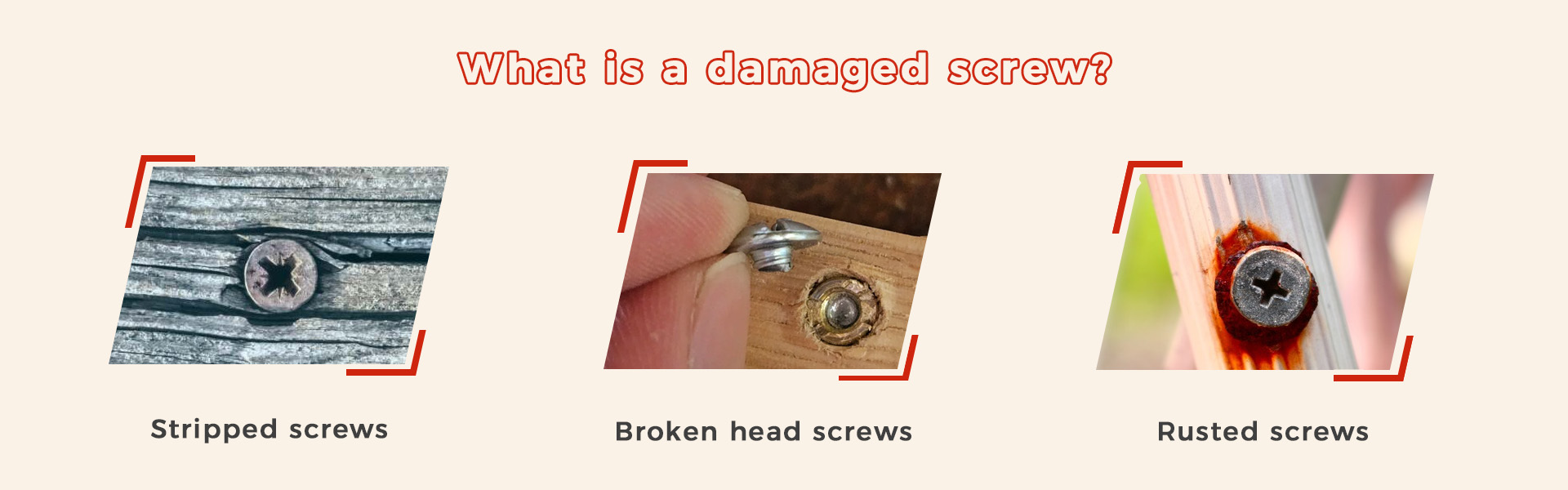
Damaged screws refer to screws that cannot be screwed out normally due to deformation, corrosion or operating errors. Common types include:
Stripped screws: The cross/slotted notch of the screw head is worn and the screwdriver cannot tighten.
Broken head screws: The screw rod is broken, the head is missing or only the stump is left.
Rusted screws: Due to oxidation or corrosion, it adheres to the base material and is difficult to turn.
Tool Preparation list:
Basic tools: screw extractor, impact screwdriver, electric drill, hammer, pliers, rust remover. Other tools: rubber gloves, goggles, rubber bands, rubber belts, epoxy glue, angle grinder (for cutting notches).
7 Common Screw Damage Scenarios + Solutions
How To Remove Stripped Screws?
When the screw head is stripped, the screw head driver is worn and deformed
Rubber bands can enhance the grip of loosening screws
Operation steps:
First, cover the screw head with a wide rubber band or rubber belt
Then press hard with a screwdriver and turn it counterclockwise, and the screw will generally loosen.
Be careful not to control the speed too fast, otherwise the rubber band will break.
How To Remove A Broken Screw?
When you encounter a broken screw , you can consider using a Screw Extractor
Operation steps:
- Use an electric drill to drill a small hole in the center of the screw. Note that the diameter of the hole must match the size of the extractor
- Screw the extractor counterclockwise into the hole, use the reverse thread to bite the screw stump,
- and then slowly rotate counterclockwise to gradually remove the screw.
How To Remove Rust Screw?
Over time, metal screws will slowly oxidize, merge with the surrounding materials, rust and corrode, and it will be difficult to remove the rusted screws.
Steps:
- Soak the screw: Apply a generous amount of penetrating oil to the screw head and threads. Let sit for 15-30 minutes (overnight for severe rust).
- Tap the screw head: Use a hammer to gently tap the screw to break up the rust.
- Try to turn gradually: Use a screwdriver with a wrench as a lever. Turn counterclockwise in small increments. Avoid using too much force and breaking the screw
How To Remove Headless Screw?
When you encounter low-quality screws or improper use that causes the screw head to fall off completely
If part of the thread is exposed on the surface of the object, we can choose pointed pliers
Steps:
First, spray WD-40 lubricant around the broken screw to achieve a certain lubrication effect
Then use pointed pliers to clamp the screw, gently shake and rotate it to remove the broken screw
Another solution is to weld the nut.
First, prepare a screw of the right size.
Then, put on goggles and gloves and weld the nut to the broken screw. Finally, use a hexagonal wrench to reverse the screw to remove it.
How to Fix an Overtightened Screw?
Excessive force during installation may cause the threads to deform or the screws may get stuck if they are screwed directly into a hard substrate without pre-drilling.
Solution:
Frequently vibrate the screws with an impact driver and hammer to loosen them and repair the threads after expansion (Helicoil kit).
How To Remove A Stripped Screw With Glue?
Some manufacturers need to apply thread glue (such as Loctite 242) to the screws before installation, which makes it difficult to remove the screws.
Solution:
The glue needs to be softened by heating, such as using a high-temperature welding gun to heat it locally to above 200°C until the glue begins to melt and soften, or soak it in chemicals. After the glue fails, you can use a screw gun to rotate the screw counterclockwise to remove it.
Precautions For Removing Screws
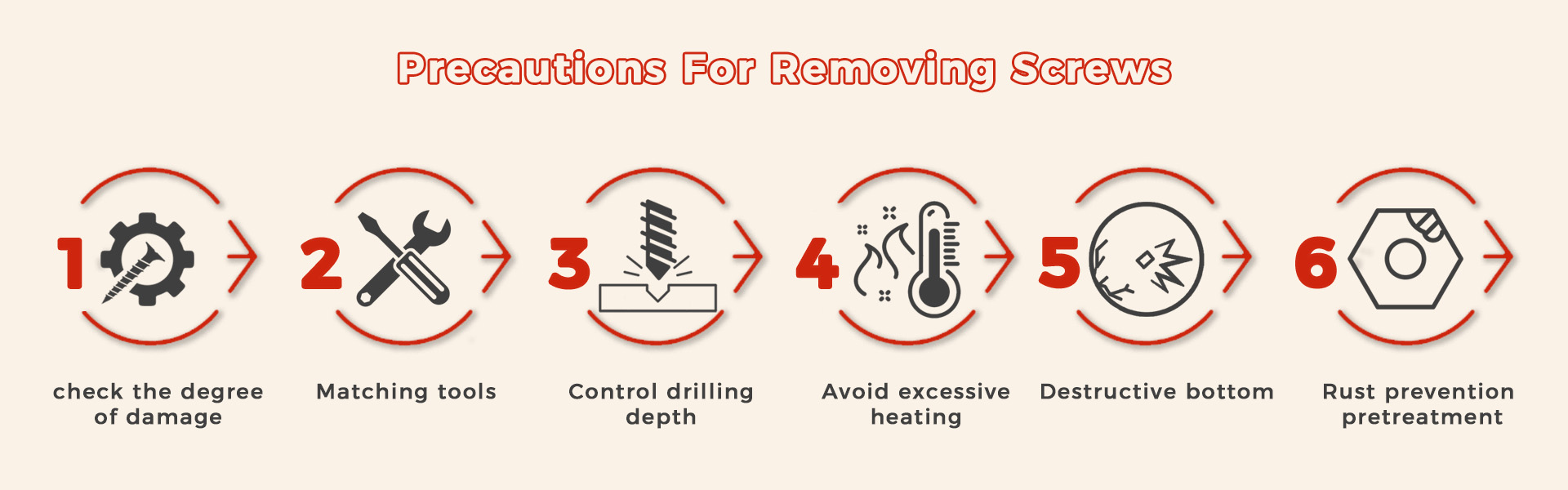
Observe first: Observe the state of the screw before removing it to check the degree of damage, such as breakage, rust or stripping
Matching tools: Try gentle methods first, from low-cost emergency methods (such as rubber bands) to professional equipment (broken screw extractors).
Control drilling depth: Do not penetrate the substrate when reverse drilling.
Avoid excessive heating: Welding may cause deformation of surrounding materials.
Rust prevention pretreatment: Apply anti-rust grease to the new screw after removal.
Destructive bottom: Expand the hole to repair or change the installation position.
Conclusion
Removing damaged screws requires patience, skills and the right tools. Choosing the right method based on the type and severity of the screw damage can easily solve the problem. Of course, in daily operations, when conventional methods fail, the assistance of professional maintenance personnel is still a reliable choice.