Screw size involves the diameter, length and thread pitch of the screw! It is the key factor in selecting screws. Choosing the right size can avoid problems such as breakage and slipping during use. After reading this article, you can quickly master screw measurement and selection. Whether you are a DIY novice or an expert in purchasing screws, you can easily avoid 90% of the misunderstandings about screw use and make your project both firm and safe!
Basic Knowledge Of Screw Sizes
Screw Diameter——The thickness of the screw
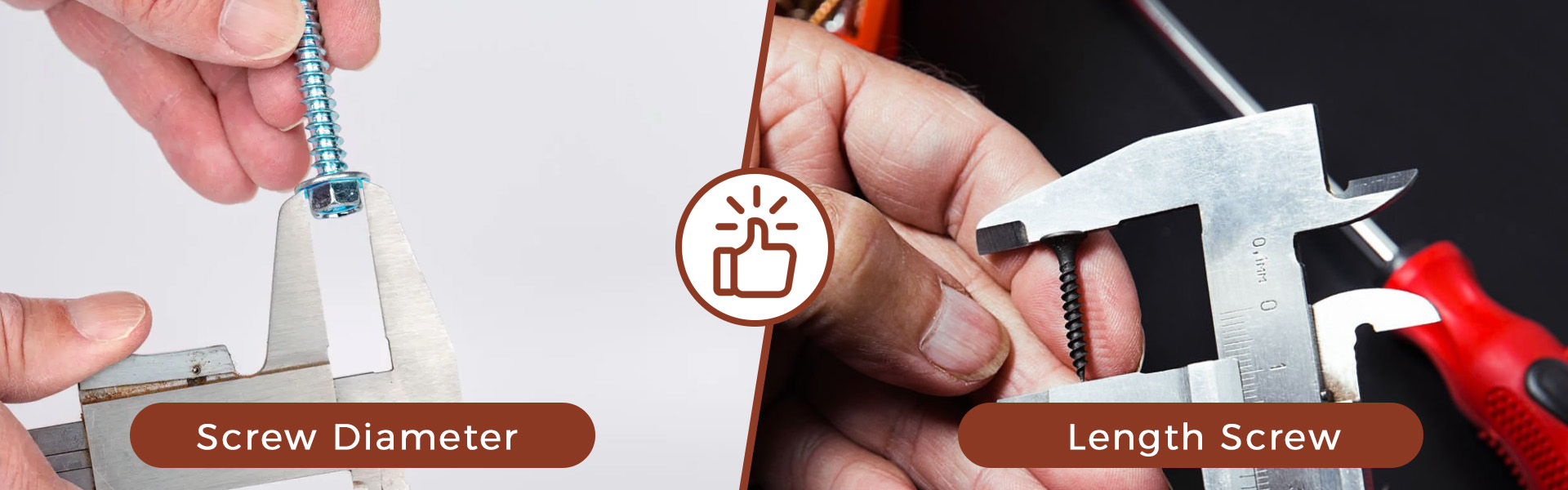
The diameter of a screw is the screw gauge, also known as the Major Diameter. It refers to the maximum outer diameter of the screw thread, which determines the screw’s load-bearing capacity and the matching drilling size.
- Measurement method:
Metric: Use a digital caliper to measure the outer diameter of the thread. If the measurement shows 6mm, it is M6 in the metric system.
Imperial: After measuring the diameter, you need to check the number comparison table. The measurement shows 3.5MM, and the Imperial diameter corresponds to #6
- Select Size Rule:
Wood: Diameter ≤ 1/4 of material thickness, to prevent screws from breaking
Metal: Match pre-drilled holes, e.g. M4 screws require a 3.3mm drill bit to drill holes
Length Screw——Distance From Screw Head To Screw Tail
Length refers to the distance from the bottom of the screw head to the tip, which determines the penetration depth and fixing strength. Generally speaking, there are two ways to express the length based on the type of screw head: Overall Length (OAL): The total length including the head, which is applicable to flat head screws, and the other is the effective length, which refers to the thread length, the threaded part that actually participates in the bite
- Measurement method:
Round head/flat head: Use a caliper to measure the distance from the bottom of the screw head to the tip
Hexagon head screw: Measure from the bottom of the screw head to the tip of the screw
- Select Length Rule:
Ideal length = upper material thickness + lower embedding depth (at least 1/2 inch or 13mm)
For example: 12mm wood board + 12mm keel → select 25mm screws
Thread Pitch – The Thread Density Of The Screw
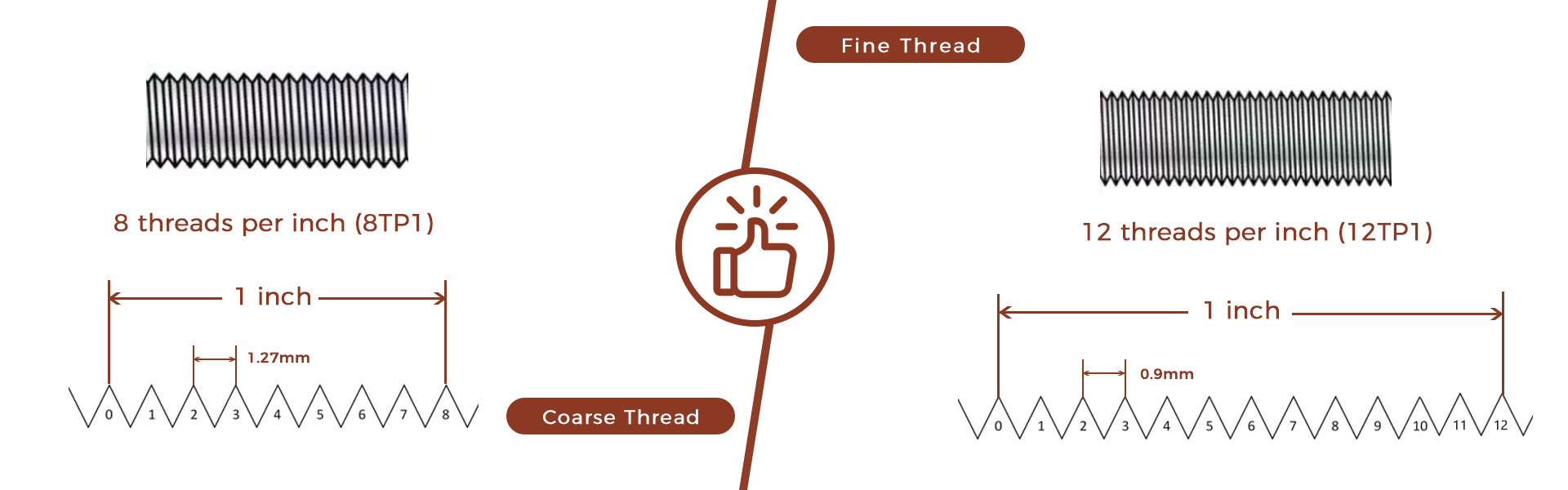
Screw Thread Pitch, also known as TPI, refers to the distance between adjacent thread tops. It is expressed in Imperial units and means the number of threads per inch. It affects cutting efficiency and anti-loosening performance.
- Measurement tips
Metric: Use a caliper to measure the distance between adjacent thread tops, or use a thread gauge to quickly match the pitch or TPI. For example, if the measured distance is 1.0mm and the size is 6MM, it can be marked as M6×1.0
Inch: Count the number of threads within 1 inch (25.4mm), for example, 13 threads = 13TPI
- Pitch Type Comparison
UNC (coarse thread): 8-13TPI (such as #8-UNC), used for wood and plastic to prevent material cracking
UNF (fine thread): 12-28TPI (such as #10-UNF), used for metal to prevent slipping and falling off.
Here’s a comparison of metric screw sizes (ISO) and imperial screw sizes (UNC/UNF), including diameters, thread pitches, and common applications:
Metric Screw Sizes Chart (ISO)
|
Diameter (mm) |
Thread Pitch (mm) |
Common Applications |
|
M1.6 |
0.35 |
Electronics, small devices |
|
M2 |
0.4 |
Toys, watches, delicate assemblies |
|
M2.5 |
0.45 |
Cameras, hobby models |
|
M3 |
0.5 |
Consumer electronics, light fixtures |
|
M4 |
0.7 |
Furniture, automotive trim |
|
M5 |
0.8 |
Machinery, automotive parts |
|
M6 |
1.0 |
Structural, bikes, automotive |
|
M8 |
1.25 |
Heavy-duty equipment, engines |
|
M10 |
1.5 |
Construction, industrial use |
|
M12 |
1.75 |
Large machinery, structural bolts |
Note: Metric threads are labeled as M[Diameter] × [Pitch] (e.g., M6 × 1.0).
Imperial Screw Sizes Chart (UNC/UNF)
|
Diameter (Inch) |
Threads Per Inch (TPI) |
Common Applications |
|
#0 (0.060″) |
80 (UNF) |
Tiny electronics, jewelry |
|
#2 (0.086″) |
56 (UNF) |
Eyeglasses, small appliances |
|
#4 (0.112″) |
40 (UNC), 48 (UNF) |
Toys, light fixtures |
|
#6 (0.138″) |
32 (UNC), 40 (UNF) |
Furniture, electrical boxes |
|
#8 (0.164″) |
32 (UNC), 36 (UNF) |
Cabinetry, automotive interiors |
|
#10 (0.190″) |
24 (UNC), 32 (UNF) |
Machinery, automotive parts |
|
1/4″ |
20 (UNC), 28 (UNF) |
Structural, heavy-duty assemblies |
|
5/16″ |
18 (UNC), 24 (UNF) |
Automotive, construction |
|
3/8″ |
16 (UNC), 24 (UNF) |
Industrial equipment, trailers |
|
1/2″ |
13 (UNC), 20 (UNF) |
Large bolts, structural steel |
Choose Screw Size According To Material
Selecting the correct screw size depends on several key factors, including the thickness of the material being installed, load requirements, and thread engagement capabilities.
The screw diameter needs to match the hole size and material strength to prevent the screw from slipping or breaking.
When choosing the screw diameter, you need to consider the hole diameter and the strength of the material to avoid the screw slipping or breaking during installation.
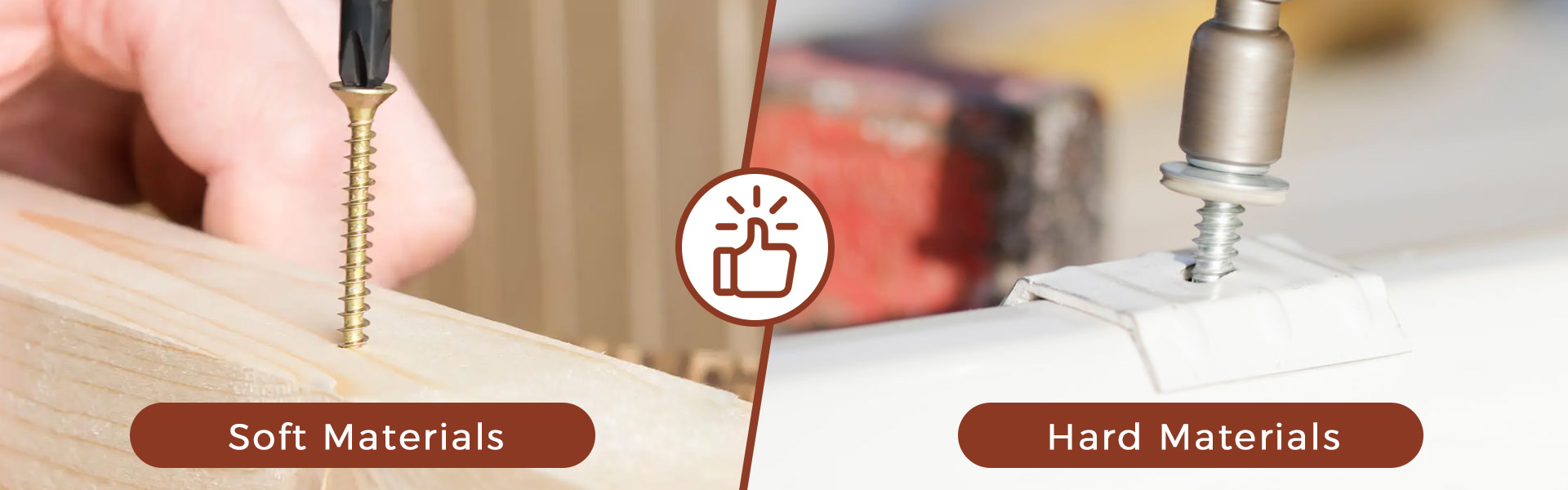
A. For soft materials such as soft wood, plastic, and drywall, you can choose #6 (3.5MM) or M6 screws.
B. For hard materials such as metal, hardwood, and concrete, you can choose #8 or M5 screws.
For heavy metal frames, use M8 or 1/4-inch-3/8-inch screws.
Rule of thumb:
The screw diameter should be about 1/10 of the material thickness.
For example: For 10 mm thick wood, use M5 screws.
- Choose the right screw length
The screw length must ensure that the screw is long enough to completely lock the material without protruding too long.
A. When installing soft materials such as wood and plastic
The screw length is generally 1.5-2 times the material thickness.
For example: For 12 mm thick wood, use a screw with a length of 18-24 mm.
B. When installing hard materials like metal or concrete, the screw length is generally equal to the material thickness + 5-10mm, so that the material can be fixed stably. Example: For 5mm thick steel, use a 10-15mm long screw. Also avoid over-penetration of the screw and make sure that the screw does not protrude more than 2-3mm on the other side. Note that for countersunk screws, the depth of the screw head should be considered when selecting the length.
2. Choose the pitch
(coarse thread vs. fine thread) The pitch affects the grip and resistance to loosening. Soft materials: wood, plastic, drywall Choose coarse thread (UNC/metric standard) #8-32, M5×0.8 Hard materials: metal, hardwood, concrete Fine thread (UNF/metric fine thread) #10-24, M6×1.0
Practical selection suggestions
Transnational projects:
If the drawing is in metric, do not mix imperial screws (e.g. M6≠#12, the error is up to 1mm!)
Have a dual-caliper (mm/inch dual scale).
Thread matching:
Metric screws screwed into imperial holes? Absolutely prohibited! It will damage the threads.
In case of emergency, you can use an imperial screw that is 1 size smaller, such as M5, and you can choose a #10 screw instead.
Easy to confuse:
M6≠#6: M6=6mm diameter, #6≈3.5mm!
Conclusion
Master the three key points of screw size selection: diameter, length and thread pitch. Correctly matching these three key parameters can avoid loosening, breakage and material damage. When you need it, you will know exactly how to choose the screw that suits you. If you have any confusion about screws, please feel free to contact us. Sinsun has a professional team to help you choose the best screws for your project.