The quality and durability of a screw are not only determined by high-quality raw materials, but also by surface treatment. This is by no means an optional decoration, but a key factor related to the performance and life of the screw.
The core role of surface treatment
Resist rust:
This is the most basic and important function. Screws are often exposed to moisture, salt spray, chemicals and other environments. The surface treatment layer (such as zinc, nickel, Dacromet) can effectively isolate air and moisture, prevent the steel matrix from rusting, and ensure long-term reliable connection.
Improve wear resistance:
Repeated tightening, loosening or friction with the connecting parts will wear the screws. Some treatments (such as phosphating, hard chrome plating) form a higher surface hardness, or contain solid lubricants (such as molybdenum disulfide), which can significantly reduce wear and extend service life.
Improve appearance: For screws exposed to the outside, aesthetics is also important. Electroplating (such as chromium, nickel) or spraying (such as colored zinc, black oxide) can provide bright, matte or various color effects to meet the overall design requirements of the product.
Auxiliary functions: Some treatments can provide specific properties, such as the phosphating layer can enhance paint adhesion and facilitate subsequent painting; some coatings can provide weak conductivity or insulation.
Common surface treatment methods and their uses
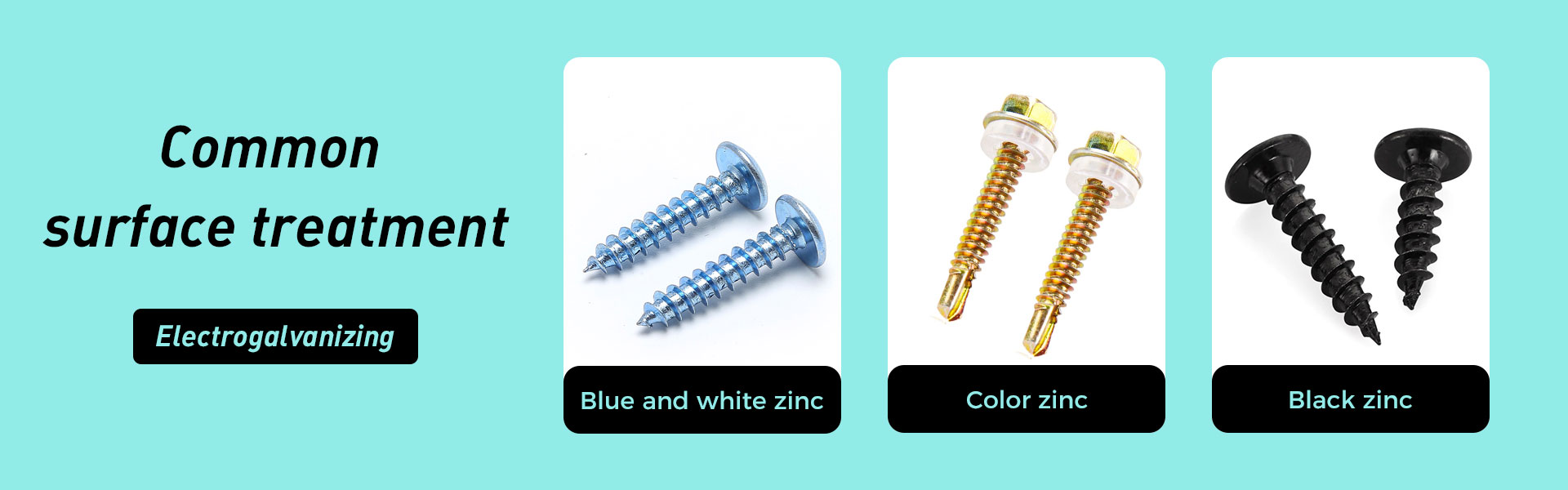
Electrogalvanizing (blue and white zinc/color zinc/black zinc):
Features: Low cost, wide application, medium rust resistance. Color zinc (color after passivation) is better than blue and white zinc in rust resistance. Black zinc has both rust resistance and black appearance.
Uses: Ordinary indoor equipment, furniture, electrical appliances, general structural parts. Color zinc is often used in occasions that require a certain degree of decoration. Like hex self drilling screw and truss head self drilling screw, galvanizing is commonly used
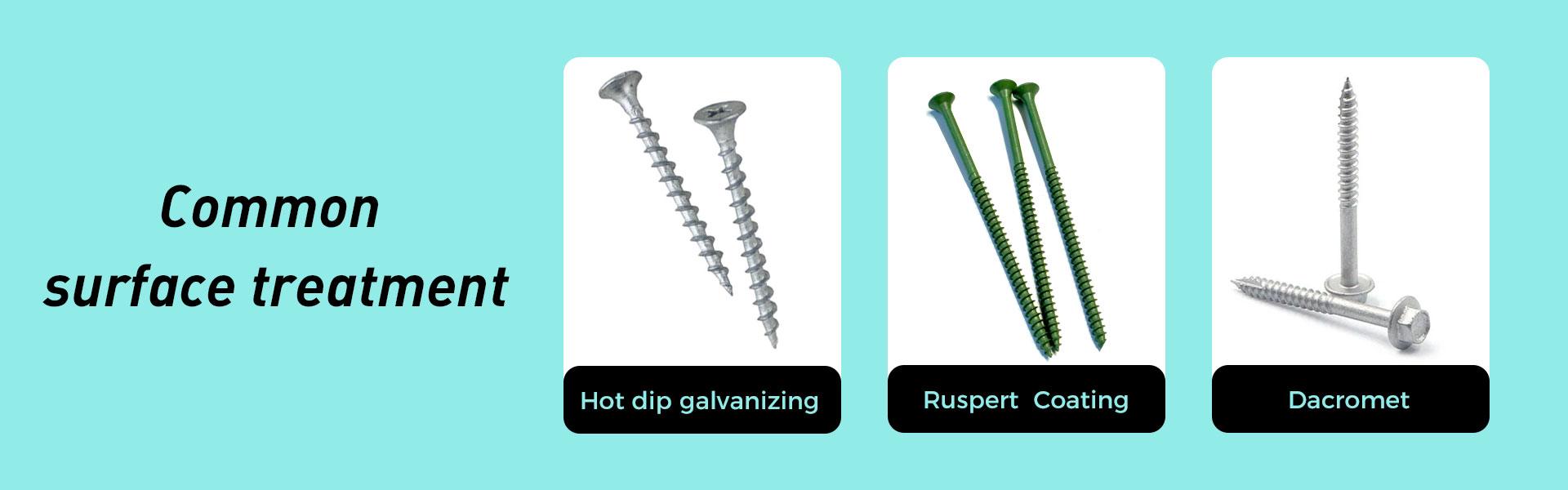
Hot dip galvanizing:
Features: Thick coating (usually more than tens of microns), strong rust resistance, especially resistant to atmospheric corrosion, but the surface is rough and the accuracy may be affected.
Uses: Outdoor buildings (steel structures, bridges, guardrails), power towers, agricultural machinery and other heavy anti-corrosion fields
Ruspert Coating:
The hot rust screw uses the zinc infiltration surface treatment process. This process forms a uniform and dense zinc-iron alloy layer (rather than pure zinc plating) on the surface of the steel matrix through high-temperature thermal diffusion. It has excellent corrosion resistance (neutral salt spray test can reach more than 500-1000 hours), high hardness, no hydrogen embrittlement risk, good wear resistance and environmental protection.
Dacromet (zinc-chromium coating):
Features: No hydrogen embrittlement, high temperature resistance (up to 300°C), excellent corrosion resistance (especially in salt spray environment), thin and uniform coating, and environmentally friendly.
Applications: Automobiles (engine periphery, chassis), motorcycles, outdoor engineering machinery, marine environments, and areas that require high corrosion resistance and are prohibited from electroplating.
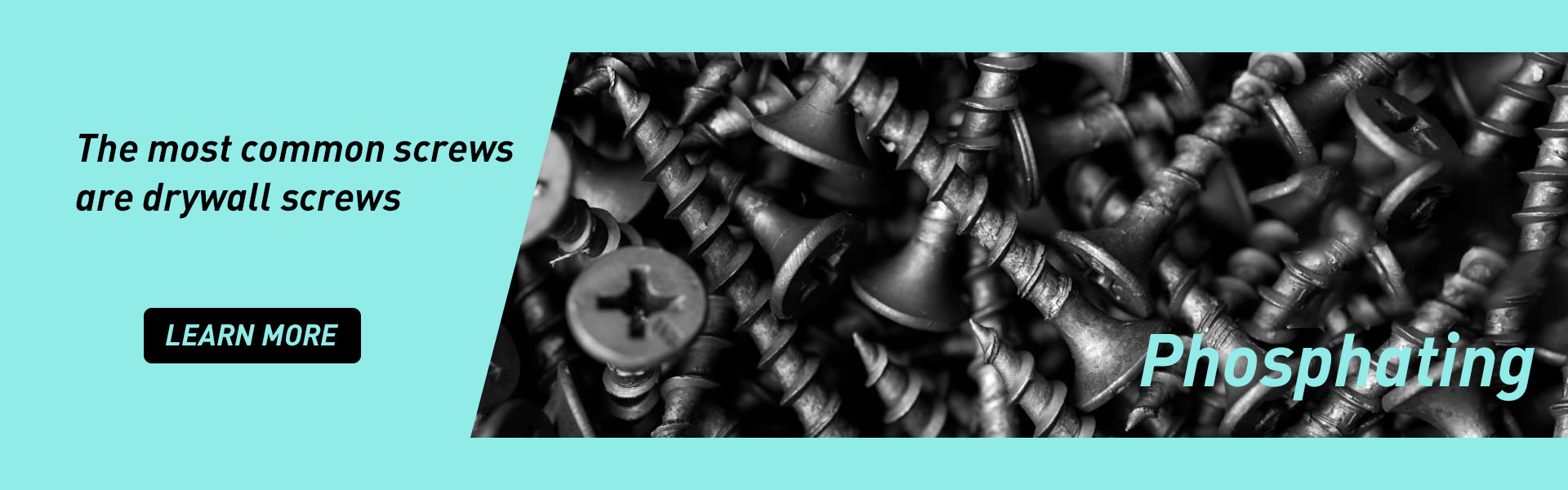
Phosphating:
Features: It forms a porous phosphate crystal layer, which mainly functions to improve lubricity (reduce tightening torque/anti-seizure) and enhance the adhesion of subsequent coatings (such as spray painting), and its own anti-rust ability is weak.
Applications: Parts that need to be painted (such as car body screws), assembly lines that require good lubrication, and parts that come into contact with oil products. The most common screws are drywall screws
Oxidation black (bluing):
Features: Low cost, black or bluish black appearance, with certain rust resistance, but the main function is to improve the appearance and provide slight wear resistance.
Use: Tools, gun parts, instruments, internal structural parts, etc., where there are certain requirements for decoration and the environment is not too harsh. The representative screw is cement screw
Customized surface treatment: meet your unique needs
In addition to standard treatment, actual applications often have more specific requirements. This is the advantage of professional fastener suppliers like Sinsun Fastener. We understand that the “one size fits all” solution does not always satisfy customers:
Color customization: Do you need the screws to blend perfectly with the appearance of the product? We can provide electroplating, spraying or Dacromet treatment in a variety of colors (such as blue, green, red, yellow, etc.) to ensure visual coordination and unity.
Coating thickness customization: Different levels of environmental corrosion? Have special requirements for wear resistance? We can precisely control the coating thickness (e.g. electrogalvanizing from 5μm to more than 20μm, Dacromet from 4μm to 15μm, etc.) to achieve your desired corrosion resistance and service life.
Response to special requirements: Need chrome-free environmental protection treatment? Require a specific friction coefficient (lubricity)? Have special indicators for high temperature resistance? Sinsun Fastener can recommend the most suitable treatment process and customize production according to your specific working conditions and technical parameters.
Conclusion
The surface treatment of screws is an indispensable guarantee for the performance of connectors. Choosing the right treatment method directly determines whether the screws can work stably in a specific environment, as well as the overall quality and life of the product. Understanding the characteristics of different treatments and selecting them in combination with actual application requirements – even customizing – can make every screw play its due value. When you have surface treatment requirements that exceed conventional standards, professional fastener partners such as Sinsun Fastener can provide practical customized solutions.