As a veteran at Sinsunfastener for over 10 years, I work with all kinds of screws daily and am very familiar with them. Many customers have reported that they’re unsure of the material they should choose when purchasing screws. Today, we’ll explore several common screw materials and their uses for your reference.
1. Carbon Steel:
Introduction:
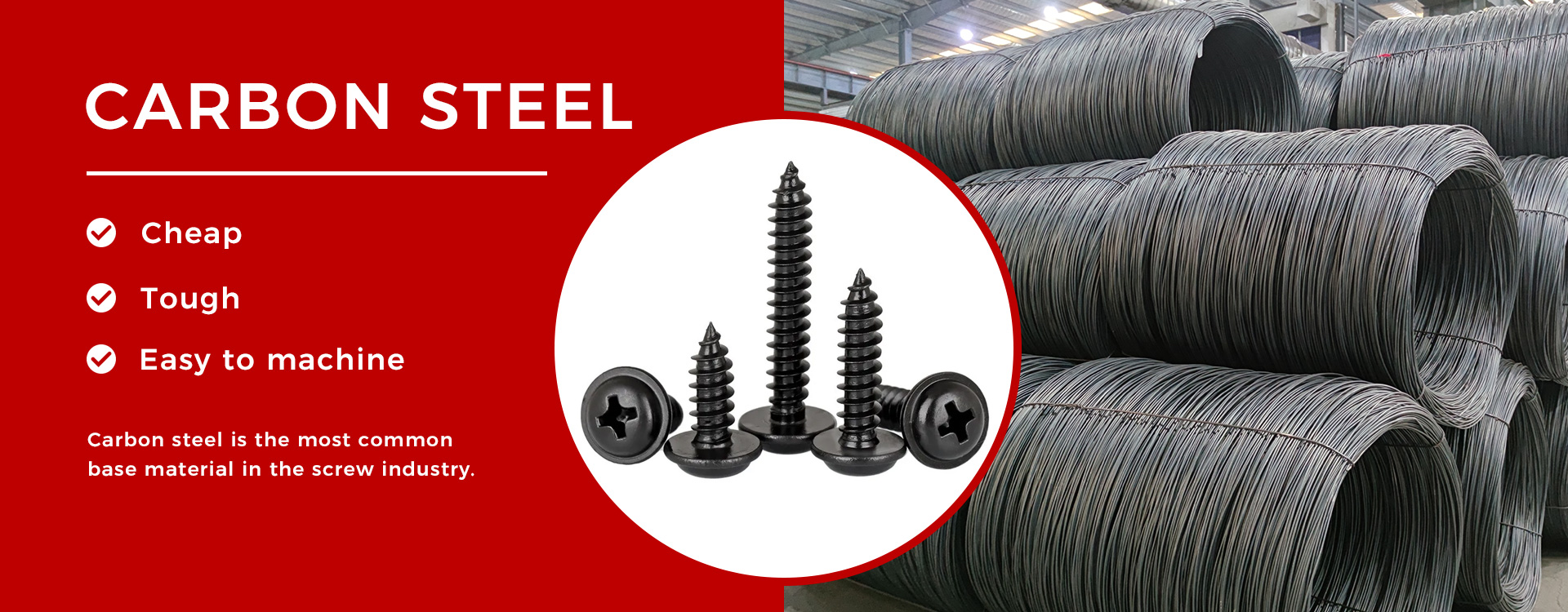
Carbon steel is the most common base material in the screw industry.
its offers the lowest cost and highest production volume. 90% of the raw materials piling up in our workshops are carbon steel. Its strength is enhanced through heat treatment (quenching and tempering). Common grades include 8.8, 10.9, and 12.9, which can withstand high tensile and shear forces.
Pros and Cons:
The advantages :can be summed up in three words: cheap, tough, and easy to machine. Our factory’s equipment handles it best for turning, cold heading, and heat treatment.
Cons: is its tendency to rust! Exposure to moisture, salt spray, or the odor of a chemical plant can cause it to rust. So, carbon steel screws are “coated” before leaving the factory—galvanizing (electroplating or hot-dip galvanizing), phosphating, Dacromet coating, or nickel plating—to give them rust-proof armor.
Applications:
Used everywhere! Factory steel structures, assembly line machinery, appliance casings, furniture assembly… Unless it’s a beachfront location, a chemical plant, or a place exposed to constant rain, it’s a must-have wherever cost-effectiveness is a concern. The most popular type of screw sold at your local hardware store is typically galvanized carbon steel screws. They’re used most in industrialized construction and general-purpose equipment. Galvanized carbon steel screws are the most common type in everyday life.
2. Stainless Steel:
Introduction:
The key to this material’s “stainlessness” is the addition of sufficient chromium (generally over 10.5%), which allows it to form an invisible “passivation film” on the surface to protect against corrosion. Commonly used steels in factories are categorized into several types: 304 (A2) is a universal standard, 316 (A4) adds molybdenum for increased corrosion resistance (especially against seawater and chemicals), and 410/420 grades are quench-hardenable (martensitic).
Pros and Cons:
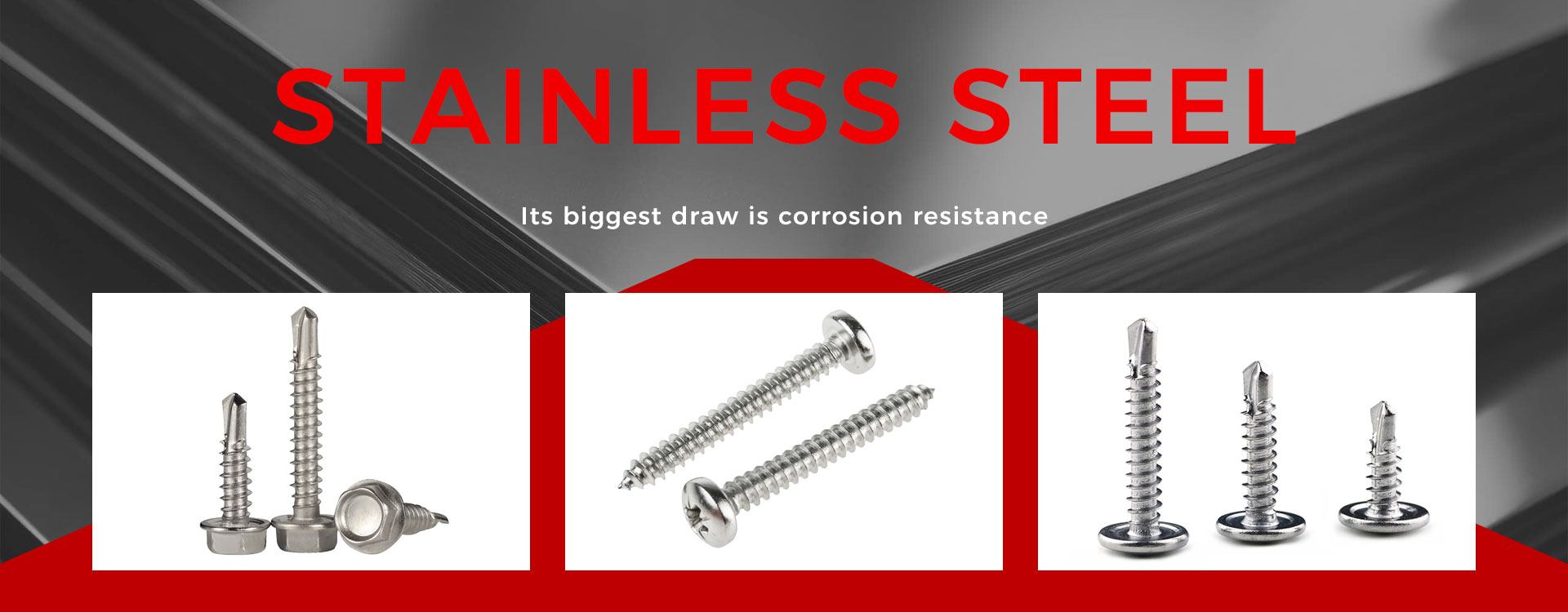
Pros: Its biggest draw is corrosion resistance. 304 handles normal rain and moisture with ease, while 316 is designed for marine engineering, chemical equipment, and coastal wind power plants. It’s also essential for food-grade equipment and medical devices, as it’s easy to clean and pollution-free. 304/316 are not magnetic (304 may become slightly magnetic after cold working) and offer good toughness.
Cons: High cost! Much more expensive than carbon steel. Its strength is generally lower than comparable carbon steel grades, but 304 can be cold-worked to C1 and C2 grades, which also increases its strength. It has strong work hardening properties, so drilling and tapping require careful handling and proper lubrication.
Applications:
Specialized in areas where rust, dirt, and harsh environments are critical: food and beverage production lines, pharmaceutical equipment, surgical instruments, kitchen and bathroom hardware, ship dock facilities, chemical plant pipe flanges, outdoor photovoltaic mounting systems, precision instrument movements, and sophisticated high-end appliances (such as washing machine drums). They are also increasingly used in battery packs and electric drive systems in new energy vehicles, where corrosion is a concern but reliability is crucial.
3.Alloy Steel Screws:
Introduction:
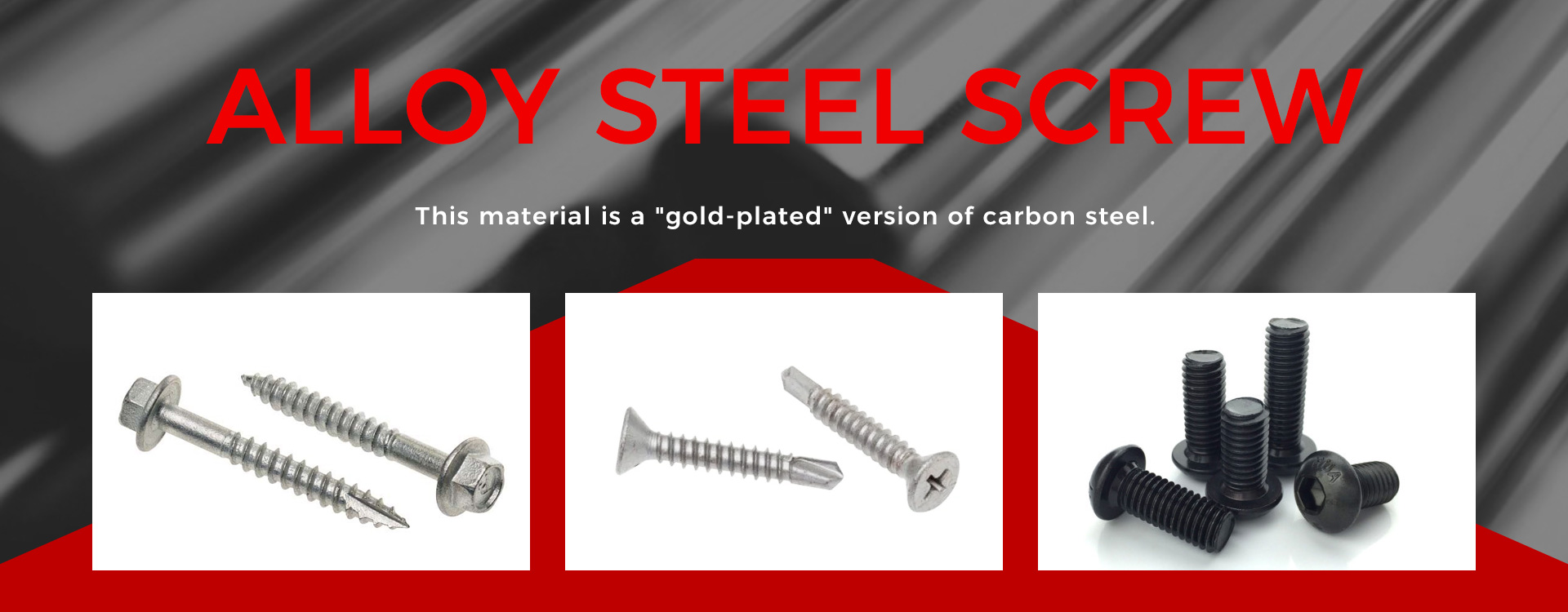
This material is an upgraded “gold-plated” version of carbon steel. It incorporates a significant proportion of alloying elements such as chromium, molybdenum, vanadium, nickel, and boron. This is then combined with a rigorous heat treatment process (quenching and tempering, with critical temperature control). The goal is one: to achieve ultimate strength! These grades, such as 14.9 and higher, are what we’re talking about.
Advantages and Disadvantages:
Advantages: Ultra-high strength and toughness! They withstand heavy pressure and resist breaking easily even after repeated vibrations (such as engine vibration). Some high-grade alloy steels can also withstand relatively high temperatures.
Disadvantages: High cost, driven by alloying elements and complex heat treatment. Furthermore, its inherent rust-proofing capabilities are limited, requiring surface protection (such as phosphating and Dacromet treatment). Processing and heat treatment are complex techniques; poor craftsmanship can significantly impact performance, leading to high quality control costs.
Applications:
Critical connections in aerospace engines, high-performance racing engines, joints in heavy-duty engineering machinery, key components in oil drilling equipment, and wind turbine equipment, among other applications requiring high strength, reliability, and fatigue resistance in extreme environments. It may also be used in the extremely high-load robotic arm joints on smart manufacturing production lines.
4.Non-ferrous Metals:
Copper and Copper Alloys (primarily brass):
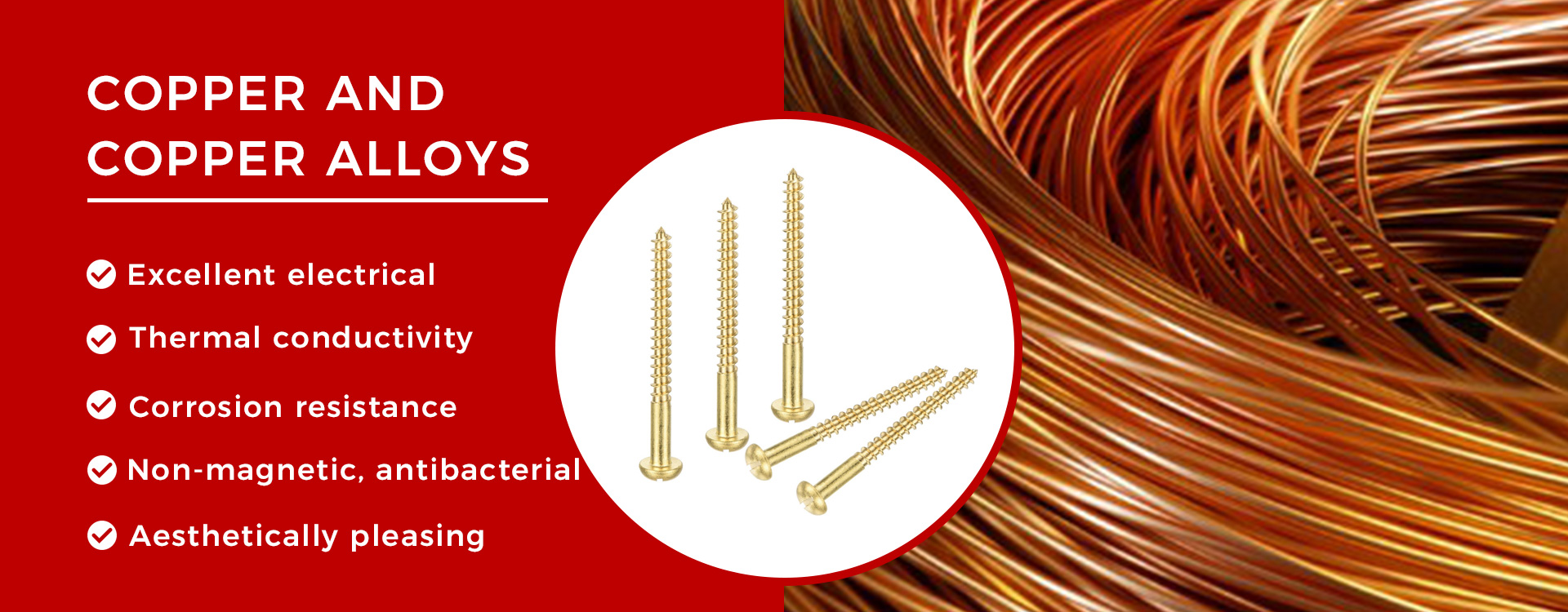
Golden in appearance, they offer excellent electrical and thermal conductivity, are naturally resistant to seawater and atmospheric corrosion, and possess inherent antibacterial properties.
Advantages:
Advantages: Excellent electrical and thermal conductivity, corrosion resistance (especially seawater and atmospheric resistance), non-magnetic, antibacterial, and aesthetically pleasing.
Disadvantages:
Lower strength (generally lower than carbon steel and stainless steel), high cost, and prone to stress corrosion cracking (in certain environments). Applications: Electrical terminals (critical for the smooth flow of current), marine equipment, musical instrument accessories, faucet cores, decorative fasteners, and precision laboratory equipment requiring absolute non-magnetic properties.
Aluminum Alloy:
Introduction: This material boasts a lightweight design, boasting a density only one-third that of steel.
Advantages and Disadvantages:
Advantages: Extremely low density (lightweight), excellent electrical and thermal conductivity, durable and corrosion-resistant after anodizing, and non-magnetic.
Disadvantages: However, strength and hardness are generally weak (high-strength aluminum such as 7075 is an exception), prone to scratching and wear, susceptible to galvanic corrosion when in contact with other metals, and heat-sensitive.
Applications: Aircraft and rockets (every gram of weight reduction counts), drones, high-end bicycles, housing fastenings for consumer electronics (cell phones, laptops), heat sink fastenings, and weight-sensitive sports equipment.
Titanium Alloy Screws:
Introduction: This material is a leader among all raw materials, boasting strength comparable to alloy steel but nearly half the weight, near-unrivaled corrosion resistance, and the ability to coexist peacefully with the human body.
Advantages and Disadvantages:
Advantages: Top strength-to-weight ratio, corrosion-resistant, biocompatible, high-temperature resistant, non-magnetic.
Disadvantages: Extremely expensive! Extremely difficult to machine (hard, sticky), requiring specialized tools and processes. Its low hardness makes it susceptible to wear and galvanic corrosion.
Applications: Aerospace (airframes, engines), high-end medical devices (implants), deep-sea equipment, high-performance racing cars, chemical reactors, and other cutting-edge fields that demand ultimate performance and corrosion resistance.
Conclusion:
Choosing raw materials for screws is just like choosing welding rods and cutting tools in our factory. There is no “best”, only “most suitable”! Calculate the cost, consider the environment, and think about the load requirements. Use the right material, not just the price. Choosing the wrong raw material can cause the screws to rust, break, strip, or even worse, affecting the quality of the project. Screws may be small, but they are a big responsibility! Don’t underestimate them. If you want to know more about screws, please feel free to contact us.